
The White Sox announced that they’ve agreed to a three-year, $50MM contract with first baseman Jose Abreu. The 32-year-old slugger had previously accepted a one-year, $17.8MM qualifying offer, effectively making this a two-year, $32.2MM extension.
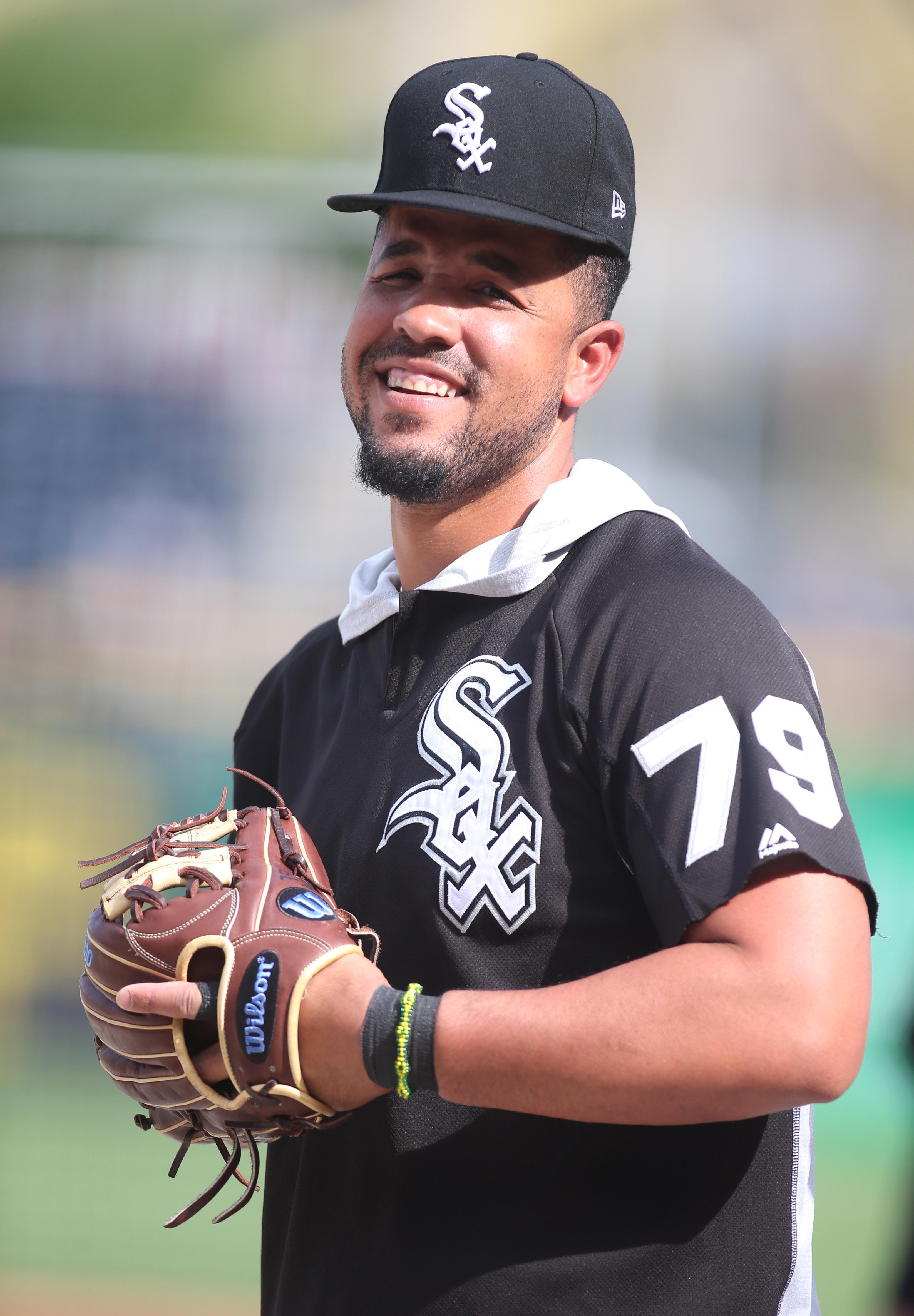
Under the new contract, Abreu will receive a $5MM signing bonus and an $11MM salary in 2020 before being paid $16MM in 2021 and $18MM in 2022. Four million dollars of that 2022 salary will be deferred, according to the team. Abreu is represented by ISE Baseball.
In signing Abreu to this type of extension, the White Sox are effectively betting (in a fairly substantial manner) on a rebound in his age-33 season next year. That’s not to say that Abreu had a poor 2019 campaign; he batted .284/.330/.503 with 33 home runs and was a decidedly above-average hitter overall. But unlike his 2014-17 production, Abreu’s output in 2018-19 has been more good than it has been great. Park- and league-adjusted measures such as OPS+ (119) and wRC+ (117) agree that he’s been nearly 20 percent better than a league-average hitter in that span, but that’s a far cry from the premium levels at which Abreu produced from 2014-17 — particularly in his brilliant 2014 rookie campaign, when he was arguably the best hitter in baseball.
The open market simply hasn’t rewarded players of this age and skill set in recent years, and it’s unlikely that Abreu would’ve had this type of earning power next winter without returning to his previous levels of excellence with the bat. Given the fact that Abreu has never been rated as a strong defensive first baseman and isn’t likely to make considerable improvements as he progresses deeper into his mid-30s, an uptick at the plate is all the more important.
All of that said, it’s also undeniable that Abreu has emerged as the heart of the White Sox in recent years. The front office, ownership and teammates alike have lauded Abreu for his leadership and the manner in which he mentors young players as they arrive on the scene. He’s also a fixture in the community on the south side of Chicago and is generally beloved by Sox fans. All of that surely factors in when pricing out a deal and is particularly likely to resonate with owner Jerry Reinsdorf, who has been vocal about his desire to keep Abreu in a Sox uniform (as has GM Rick Hahn).
From a financial standpoint, the new structure of the deal does give the Sox a bit of extra breathing room when constructing the 2020 roster. Assuming that signing bonus still counts against the 2020 ledger, they’re now at about $93.7MM in projected salary when factoring in projected arbitration payouts. Parting with either Yolmer Sanchez or James McCann, who was displaced as the team’s starting catcher by yesterday’s Yasmani Grandal signing, would create further flexibility. Sanchez is projected by MLBTR contributor Matt Swartz to earn $6.2MM in 2020, while McCann’s projection checks in at $4.9MM.
The extent to which Reinsdorf is willing to spend on the 2020 roster isn’t definitively known by anyone outside of the White Sox’ top decision-makers, but they’re currently about $30MM shy of their record Opening Day payroll mark ($128MM in 2011) — a number that could jump to $40MM depending on the fate of Sanchez and McCann. The Sox now have about $46MM in guaranteed money on the books for the 2021 season and about $53MM on the books in 2020
That leaves them plenty of latitude for an additional long-term signing — particularly since key young players like Tim Anderson and Eloy Jimenez are already locked into long-term deals that provide cost certainty. They’ll still need to budget for pricey arbitration salaries for both Yoan Moncada and Lucas Giolito beginning in 2021, however, meaning multiple long-term additions will begin to clog up the books in a hurry. But if ownership is willing to push payroll beyond its previously established heights moving forward, it’s certainly plausible that the Sox could have more than one addition up their sleeve between now and Opening Day. The club is hopeful of adding both a right fielder and a starting pitcher to the mix, so further additions do indeed seem likely, although either could come on a shorter-term arrangement.
Not Bad!
Mistake. Maybe the most overrated first baseman in baseball right now. I would say Eric Hosmer or Chris Davis but they are just overplaid. They aren’t overrates like Abreu because everyone knows they suck. Abreu is nowhere near as bad as them but the White Sox seem to over value Abreu compared to the rest of the league.
DH spot is open. He’ll get as much time there to keep him in the lineup as they need.
StandUpGuy, you comment is overrated! Abreu has the numbers to prove he is not overrated. The addition of Grandal and possibly Robert and Madigral will just give Abreu more opportunities to get RBIs. The White Sox will be the most feared offense in 2020.
Looooong way to go before you can compare the White Sox offense to the Red Sox, Yankees, Astros, etc.
BeeVeeTee, I think he’s not overrated either and it’s a decent deal but to say that the white Sox will be the most feared offense in 2020 how about be a little more realistic
3 of 4 and another Cuban at 3b like the south side Cubans!
I think it helps them all with grandal n Jose leading that pack
well the Astros cheat so……
First of all, the White Sox had some pretty good offensive numbers last year when Moncada, Anderson, Jiminez and Abreu were all in the line up. Injuries to Anderson, Moncada and Jiminez has the White Sox bring up guys that had no business in the line up. Facts are facts! In
BeeVeeTee, I don’t follow the White Sox but I’ll take your word for it that they “had some pretty good offense” and everyone has injuries on a baseball team so that’s facts. Yankees didn’t have both Stanton and Andujar practically for the whole year. Didi missed have the season, both Judge and Sanchez missed a lot of time, and I’m missing more but injuries are part of baseball. White Sox with those players you mentioned still are not even on the level offensively with the Yankees, Astros (even though they cheat), Twins and others. So please stop being delusional.
*half
The twins? They will regress and most baseball experts have stated they believe that team was a fluke.
The most feared offense now? Haha ok sure
The White Sox are going to only get better this year. In the first few months in the 2018 season the White Sox actually put up some good offensive numbers but the pitching was just awful. Like I said at one time Anderson, Jiminez and Moncada were on the DL were the offense was terrible with the White Sox bringing in guys who should not be on a MLB roster. If Anderson, Jiminez and Moncada stay healthy with Abreu as clean up with the addition of Grandal along with Robert and Madigral coming up from AAA the White Sox can be a lethal offensive force.
I concur
K.
Boston under DD was constantly trying to get him so at least one team values him a lot.
Hosmer is overpaid, but at least his last 3 years are 13m per year instead of 20 per year in these next 3.
$16.67m avg. not $20m.
Agreed – I mean, who wears plaid in 2019?
Way underrated comment
Personally, I think plaid is pretty cool, but only in moderation. Can’t be overplaid.
I’d love to see some plaid uniforms. Maybe some bagpipes too
This is what happens when you go to ludicrous speed.
123 rbi is MAJOR production, from a first baseman or any position player really……
I disagree. It’s not possible to be overplaid
Abreu has value to the White Sox beyond his numbers. They have a lot of young Latin players and he has been a role-model/positive influence in the clubhouse for them. It would not surprise me to see him in a coaching role once his playing days are done.
Maybe because they see the value he brings off the field way more than you do? Maybe because he was a major contributor in the signings of Luis Robert, Yasmani Grandal, etc,? Maybe. but you seem to know it all, so maybe not.
Standup girl, yet another cubbietroll that’ll likely have to wait another 108 years before his flubs win again. Abreu worth every penny, he was the only legit stud position player in every aspect last year. Don’t stop now boys !
Haha! Definitely not a Cubs fan. Anybody that knows me on this site knows that for a fact. I might even be more likely to root for the ChiSox over the Cubs in the World Series. How was Abreu the only legit stud position player in every aspect last year? I hope you meant out of ChiSox players because he comes nowhere close otherwise. And the ChiSox sucked last year so who cares how he compared to players that all played on a sucky team. I can’t believe anyone would call Abreu “a legit stud position player in every aspect.” If the White Sox had an entire line up that was filled with nothing 1-9 bit Abreu clones they would have a lot of home runs. Unfortunately they would almost all be solo home runs because Abreu still hasn’t figured out how to take walks or get on base nearly as frequently as MLB players should. Not to mention the fact that all those solo hone runs wouldn’t matter because he can’t play defense and his team would give up a ton of runs as a result. “Every aspect” includes defense and on base percentage. Abreu is seriously lacking in both of those categories. He’s basically a DH that isn’t as good at getting on base as the rest of the DH’s in the league. Not to mention he is so bad defensively people are talking about moving McCann to first base in order to replace him. DH’s that can’t get on base at anywhere near an elite level aren’t worth much.
Yeah. Not “bad” it’s a HORRIBLE deal
Yay! That Jose Abreu is one righteous dude.
Nice. This is good by the WhiteSox. I still believe that the WhiteSox overpaid for Grandal. I would not offer more than 56 million to him.
18+ fWAR last 4 years. You’re wrong.
Sometimes we have different perceptions. We cannot always focus on past performances. Time will tell if this was a great signing. Hopefully, I am wrong.
If either one of the deals is an overpay it would be this one. Abreu is 33 years old and per WRC+ was a worse hitter than Grandal the last 2 seasons. Still a productive hitter but worse than Yasmani.
You wouldn’t have been able to sign him for $56 million
Forget saberstats. The man appears to be the key cog in the clubhouse, something that can be very important yet can’t be measured statistically. A very fair deal in that he seemed to outperform what he was being paid every year until this past year when he was still above average.
You can’t get emotionally attached to a player either. He’s entering his age 33-35 seasons. They have a catcher who will probably get some starts at 1B/Dh and they have Eloy Jimenez who is best suited for some DH work.
Now Abreu is their clubhouse leader and if they want the guy to be there then they made it happen. But this may limit their flexibility in the long term. They had him locked in for next year already. So there’s some risk here.
BenCole, let’s say if Grandal did not accept the 56 million there are other catchers available. He is the best catcher in free agency, but I wouldn’t give more than that amount. Now players demand how much they want to earn and there are teams who falls for it. I rather like seeing teams giving offers to players and if they do not accept it move on and sign someone else. The ones who suffer are us buying the tickets at a higher cost.
Abreu deserves this payday, and he is a better hitter than Grandal. He also should be a White Sox.
That said, the chi Sox are cornering the market on DH’s. With Jimenez, Collins, Abreu and even Moncada – they have a bunch, without even including Grandal. There may not be a more defensively challenged OFer in baseball, than Jimenez.
a worse hitter than Grandal the last two years? where on earth are you getting that from?
I’ll see your Jimenez and raise you a Jose Martinez.
So players shouldn’t be allowed to earn a fair salary because, what, tickets might cost a bit more? Dude? I don’t know why people side with teams and billionaire owners on this issue, and never will. Look at the amount of time and effort a player puts in to play at the highest level. If you want a cheaper ticket, you can go watch a minor league game. The quality won’t be as good, but like everything else in life, you get what you pay for.
@jbigz12
Abreu is a legit RBI guy. I know RBIs aren’t the best indicator of a good hitter but in his body of work (3,900 PA) he has a career OPS of .951 with RISP which is 121 points higher than his career OPS w/o RISP (.830). If they can get some guys in front of him and some protection behind him he can be a beast.. Grandal should definitely hit in front of him. Aside from Grandal, no one on the team knows how to take a walk and most of them strikeout way too much.
Abreu’s a good middle of the order hitter I don’t deny that. When you’re considering positions it’s obvious that a guy like Grandal who can hit at that level is far more valuable. 1B who can put up 800+ OPS are abundant. Catchers aren’t. if you were going to say one of the two deals was an overpay I wouldn’t be arguing that it was the one for the catcher. That’s all I was saying here.
Both deals could be perfectly fine. Abreu has consistently hit. He scares me if his bat speeds slow down though because he isn’t a walk guy at all.
Abreu is no Matt Carpenter, now that was a bad signing!
Of course flexibility will be reduced carrying all that postseason hardware.
Thank you A_O. Surprised it took this long for someone to take this stance. I think the $/year figure is higher than expected, but they just gave someone they appreciate on multiple levels a nice raise. I, for one, am a fan of the family style operation we see here. Fortune500 baseball is not the only way. More championships? Perhaps, but it would feel a lot sweeter to see Abreu help raise a trophy, or even win the division.
Sure there are other catchers available but none near Grandals level
Francy was ticket prices are based upon supply and demand not payroll
Not gonna lie, I absolutely despise the mom-and-pop silliness at 35th and Shields.
Yeah, but the fans love it when the team rewards fan favorites for past performance and assure them of retiring w the team. And erecting statues or offering employment once they retire (Paulie, Harold, Buerrhle, Pudge, Big Hurt, Thome)
abreu is not young and either is grandal but the Nats won the world series with the oldest roster in mlb. Neither have had serious injury, experience matters especially on a young team. Well worth the price, still well below the cap
I’m glad my Reds didn’t get him. I’m happy to see what our top prospect, Tyler Stephenson has. And if he doesn’t make it, I want Realmuto in free agency, who’s a better hitter, while just as elite defensively.
Grandal’s outhit Realmuto over the course of his career. Of course Realmuto couldn’t hit very much when he first came up. But Over the last 3 seasons Grandal has still outhit Realmuto in the aggregate. They’re pretty close offensively. I think Realmuto separates himself from Grandal defensively.
are you kidding me? Realmuto’s rookie numbers were great for a catchers and he’s only gotten better since then. meanwhile Grandal cant hit .240 and benefited from a single big half and a juiced ball last year.
Buddy if you’re going to use Batting average I can’t help you. Realmuto was 11% below league average hitting his rookie season. Grandal was 44% better. These are just numbers. I can’t help if you don’t know how to interpret them.
You seem to have something against Grandal. I’m sorry that you have something against him. Batting average is not how you determine player value. I don’t know what to tell you here.
If you’d prefer Realmuto offensively. That’s a fine take. Realmuto has out hit him before. They’re close enough for you to have that opinion. I think they’re real close offensively.
For you to say Grandal sucks is idiotic. You keep on saying it but I’m dealing w the guy who thought James Mccann was better than Grandal. So I don’t know what to tell you. All I can tell you is look at the numbers. Grandal walked 17% on the time and got on base at a .380 clip. Im sorry he doesn’t have the batting average you want him to have but that has a ton of value. Especially from the catcher slot.
If you’re one of those guy who thinks a 275 batting average and a 290 OBP is better than a 240 BA 380 OBP then you’re just going to be lost here. I can’t help.
Grandal is the better hitting catcher. In the past Realmuto has been able to steal some bags, which might boost his value a bit. I don’t think that makes Grandal an inferior Catcher though. I certainly wouldn’t base anything on batting average.
10 other teams, better than the White Sox, would offer 56 mil… wouldn’t have gotten it done.
All these “overpaid” comments are meaningless. You could argue every player is overpaid. It’s what the market required. Period. Almost every major agent signing could be called “overpaid”. It
I would’ve preferred a 3 year deal as well, but this is what it took to get him and the Wsox got their man. And if they let Abreu walk, I truly believe it would of been a letdown to the younger players he mentored coming up. I know every bird needs to fly away from the nest, but I believe the team will have more fun playing baseball with him there, which will put less pressure on the young guys. Just look at Da Bears this year with high expectations, they’re not enjoying the game because they’re mediocre with title expectations coming into the season and they’re far from it. Go Sox, take the division this year and more! Thank you again to everyone for your opinions!
Spending some more cash this offseason while also defining their core going forward. Don’t stop now boys!
The White Sox past two FA signings giving multi-year deals to a C and a 1B/DH makes one wonder if they are also working on a blockbuster trade that involves prospects who also play those positions, perhaps to address their blackhole in RF.
Dumb. Really, really dumb.
Would love to know why this is really, really dumb.
Because he’s a cubs fan and his “dynasty” never happened. That’s why
Absolutely
A terrible defender. Has declined at the plate the last 2 years. Is nearing his mid-30 and as a RHH “1B” (should be a DH) should have the lowest cost to production for any position both in FA and in trades.
In the Sox case specifically, they’ve spent the last 5 year acquiring more than a half dozen 1B/DH types, again a position with little trade value, who are now blocked by an aging, declining, expensive weight.
name the players who had over 120+ rbi last year because Jose Abreu was one of them at 123 rbi, which is MAJOR production for ANY position player…..
Dude accepted the QO so he didn’t think he could get 2/35.6mm this year. Why would he get that when he’s a year older? So downside to not doing the extension is 3.6mm max whereas injuries or age declines opens you up to 30mm downside by signing him. Makes zero sense other than a good faith gesture to loyal player.
Let’s assume it’s just “good faith gesture” … do you see zero value in that? They just told their entire current roster and all impending free agents that you commit to us and we’ll commit to you. Look at the Yankees and Mets who are refusing to pay guaranteed contracts. Loyalty still matters to some of us. And btw, he’s being paid for a lot more than just “good faith gesture” – the guy is the main reason Luis Robert chose the Sox and had a good amount to do with Yasmani signing here. Great clubhouse guy, quiet leader, and oh ya… he only hits .300/30/100 every year.
Ramonskee spot on brother, Abreu is essential for the development of all this young talent and oh btw dude led MLB in Rbi’s last year
Very true!
Man, these athletes great salaries!
You should see Mike Trout’s contract. 12 years, $426 million dollars. Fully guaranteed. Average of at least $35.5 million every year. Full no trade clause so if the Angels ever want to trade him he can either prevent them from doing so or he can basically choose where he wants to go.
Thats a lot of salt
This makes sense for both sides.
Let’s hope the next announcements the White Sox make are signing Wheeler then giving Moncada an extension!
Yes on signing Wheeler – maybe trade with Braves for Foltynewicz say McCann.
As a Braves fan, sorry, no deal. We could use a catcher, but I’m not trading a piece we need for another piece we need.
Contreras instead for Fried?
Bryant for SP and some major upside prospects?
Why not right?!
Contreras for Fried I’d do. I also like McCann from the Sox, too.
I’d rather have JD back than give up the mega package for 2 years of Bryant though, sorry.
Damn, White Sox aren’t fooling around!
except pitching wise where they wont pursue Stras and Cole. They think Wheeler is good.
Stras and Cole are both from Southern California with no ties to the Midwest.
Hard to see either sign with any team not on the coasts with all 3 SoCal teams needing pitching and the Yankees, Phil’s and Nats also in pursuit too. Still I bet the White Sox join the pursuit even though it’d highly unlikely they get either one.
Not sure why fans think players want to go “home” to play baseball. It rarely a determining factor for most of them. They go where the money is. It’s as simple as that.
It’s a climate thing.
@ChiSoxCity
It can depend on personality. If I’m already making a ton of money, I’d rather stay somewhere I’m familiar with [and like, of course] than take more money to go somewhere else.
But I’m sure I’m part of a rather small minority.
Ah, like when Jon Lester (WA born) signed with the Mariners or when NJ born Jason Heyward signed with the Yankees. What ties did Harper have to Philly? I though Mike Trout was going home to east coast?
It’s about the money. Most players will play wherever they offer the most money. If the ChiSox offer the most $$ for Stras (unlikely), I’m sure he would strongly consider it.
I’m just saying, it CAN happen. The vast majority of the time it doesn’t.
But it can.
Players have taken smaller contracts before, and if there are other reasons they might do that (playing for a contender, for example), then you can’t tell me that “near where I live/grew up” is NEVER considered by anyone ever.
[I mean, even with Mike Trout’s extension, he’s staying with an organization he’s familiar with. As much as he got from the Angels, does it really compare with what he’d get as a free agent?]
Ugh, why? QO deal was great for the team.
3 years at $50 is good for abreu. The guy hits 30 and 100 ever year.
Abreu goes to dinner with Grandal last night, calls Hahn this morning, signs.
Haha good one…
Not a bad extension for Abreu but I hope they get a starting pitcher or 2.
Would like to see Yolmer stick around for insurance, but probably won’t happen. His projected salary, if applied to a FA starter, would turn a #3 starter into a #1.
Trying to free up a little extra payroll in the 2020 budget for a top level starter maybe?
Next move to free up a little more budget space should be to trade McCann. Collins can play behind the plate as the backup.
Seems like another slight overpay but unlike Grandal absolutely no urgency to do this. Can’t see how this same deal isn’t able to be done next November after getting a look at another year of aging and at bats.
I don’t really understand this at all. They had Abreu on a QO for next season, why extend him? Especially with Vaughn and quite a few others who can play 1B and DH. I hope Hahn’s not planning on dumping the farm for a Betts rental (stupid).
It’s a Yadi-type extension. I think Jerry wants to go “all-in” again.
I don’t think they’ll go after Betts.
I don’t agree with you very often but I agree, I don’t get this. He’s been phenomenal but it’s time to get younger. After this coming year they should have parted ways but eh.
abreu so important in clubhouse and with all the cuban players sox have
Abreu isn’t a generational talent, but chi-town loves him, nice to see him get what he deserves instead of ending his career elsewhere.
This is the correct take.
Man, this is a terribly dumb move by the Sox. The guy was fine for one year, why pay 32 mil for an unathletic DH at ages 34 and 35?
I am sure other front offices are laughing at this one.
Like it. Waino belongs with the Cards; Abreu with the White Sox. He ain’t great, but he’s pretty good, and they have LOTS of money; look how much they saved the past few years with their tanking.
He’s decent on the field, (reputably) great in the clubhouse, good in the community. Good move all around.
I think brett garnder might be on that same boat, as a career Yankee, but his is on a lesser level. He just wasn’t as good in his career.
Wonder how much $$ Abreu has saved (and will save) the franchise just by persuading other talent to get on board.
Wow!!! If I were Zack Collins, I would be calling my agent begging him to get me out of Chicago. Talk about being blocked. Between Grandal, Abreu & McCann, Collins has nowhere to play.
McCann is going to get traded.
@coldbeer If he’s not traded, that would suck for Collins who’s already 24 y/o and has nothing left to prove in the minors. The kid had a .951 OPS last season in AAA. Hope he gets traded to a team that could use him in 2020.
Brewers should get him. I mean yall already stole our catcher so might as well work out a deal for your other one lol
That would be interesting CrewBrew.
McCann, Collins & one more prospect to Boston for Betts. Boston might even agree to pay some of Betts’ salary as well to make the deal more palatable.
McCann has one year left before hitting free agency. Get your facts straight before blabbing out a bunch of nonsense.
This guy puts up All-Star numbers each year and lead the league in Total Base just 2 years ago. So what if he is a 1b/DH only. He is a clubhouse leader and sets an example for a very young team. I would take him in a heartbeat on my Rays squad. Great signing.
Agree, i’d love him as the ranger’s 1b man, but he fits in chicago.
I sense an upcoming trade with Mets for Thor.
How do you figure?
He’s cheaper for the next couple years. I think we can match up.
I hope this is sarcasm. There are so many things wrong with this statement but the biggest one is that Abreu is a horrendous defender and is not going to the NL.
Oh, also, the Mets have a first baseman who seems to be pretty good. He just hit 53 home runs as a rookie.
Not for Abreu. I don’t have the deal set up. It’s a hunch we can put a package together for a pitcher who fits for 2 years before FA.
Zack collins is in the deal?
I gotta study the Mets more. Unless you know what their needs are offhand?
I think the thought is that the Sox could trade Vaughn as a centerpiece for Thor… not Abreu. Vaughn, Collins, Dunning… some combination for 3 years of control, right?
I started thinking Jace Fry + prospect. But I don’t know, gotta meditate on it.
HA! Yeah – How about Fry + Alex Hansen… thrown in Fulmer too, all will magically find command in NY and I’m sure the Mets will be happy to take that risk.
RallyShirt there is no way the White Sox give up a good young bullpen arm like Fry for Thor.
Perhaps you are right. Nothing against Fry, I just noticed NYM might need some now bullpen and an upside minor.
I still don’t think the FA pitchers out there will be wearing a White Sox jersey next year, and frankly I’d rather keep Nova for another year than drop $100MM on somebody. Our young staff just needs a little time, we don’t need a blocking dude from a bidding war.
This is likely not a popular view, but the clamoring for spending more and big is beginning to sound like a drum march of fools. I think there are possibilities to trade for a 1 or 2 year control pitcher, and that should be the White Sox approach. Then sign a no penalty free agent RF like Puig.
Need more lefties?
Garcia, Moncada, Grandal, Collins, and if we can Sanchez. That should do.
Michael Brantley – Yankees sitting on their butts
Pactrick Corbin – Yankees sitting on their butts
Charlie Motron – Yankees sitting on their butts
AJ Pollick – Yankees sitting on their butts
Zack Greinke – Yankees sitting on their butts
Matt Scherzer – Yankees sitting on their butts
Gerrit Cole – Yankees sitting on their butts
José Abreu – Yankees sitting on their butts
I think matt scherzer is the cheaper generic version lol.
What’s Syndergaard’s expected arbitration this year?
$9.9MM, we could do it.
Brantley and Morton I agree with. Pollock is never healthy, I’ll pass. Greinke wouldn’t be a fit for NY and would bomb. They could still get Cole now. Scherzer was too rich for them at the time. Abreu, they don’t need another power right handed bat. Especially one that’s older.
Corbin they offered, but the Nats overpaid. And I don’t think he pitches as well in NY as he would in the NL.
The Pale Hose are way out in front for the “Stupid Money” award of 2019. Get Cole or Strasburg. and you win! Hopefully more than the Phillies or Padres did last year for it.
No a Sox fan but Abreu is my keeper league first basemen. I’m hoping he is the next Nelson Cruz doin his big slugging in his mid late thirties. Abreu seems to be in good shape
Like it he’s a big influence for them if they get some pitching look out.
Too much money, but Jerry has always been loyal to his guys, so it’s not surprising. Love the fact that Abreu will retire with the Sox; just wish it was a more team friendly deal.
I’ll take it, but this should have been done sooner, and with the QO, it’s an overpay for a player who has already shown signs of regression. But I don’t have a major issue because he is a legacy player for the organization who still has talent. But I fear that third year will be a bust.
Money well spent.
One year too long and probably an overpay. Abreu did well here, he was not getting that K on the open market. See if his bat holds up in year 3. White Sox need one of the elite SP available in FA.
20% better than a league average hitter doesn’t lead the American League in RBI’s.
Grandal was a good signing but I don’t understand this one from the White Sox perspective. I feel like it would have made more sense to go year to year.
So many folks here worried to death about the financial status of team owners who are worth hundreds of millions of dollars. Who cares who is over or under paid? I care about an entertaining/winning on field product!
Your point is well taken. I guess the only reason for concern with overpaying is whether or not your team still has enough to acquire all the other missing pieces in the puzzle.
“without returning to his previous levels of excellence with the bat”….I am not even sure that this article mentions that Jose Abreu had 123 rbi, which is an excellent season, by any measure…..
RBIs are a product of circumstance more than skill, which Abreu himself exemplifies perfectly. He had 78 RBIs in 2018 with extremely similar rate stats. Fewer games, of course, but not so many fewer that it explains a 45-RBI gap.
Abreu was more or less the same hitter in 2018 as he was in 2019 — a clearly above-average one but not an elite one.
Basically: while 123 RBIs is an excellent RBI total, it doesn’t really tell us much about Abreu’s overall ability. Eric Hosmer just racked up 99 RBIs while hitting .265/.310/.425.
Well id agree that RBIs are generally an uninformative stat. I would have to imagine to get 123 that Jose Abreu had pretty nice numbers with RISP.
There would be a better stat to show his production but simply having that many RBIS tells me it’s highly likely that he was successful in that area.
And yeah he was. Much better w guys on and RISP.
fangraphs.com/statsplits.aspx?playerid=15676&…
Of course RISP aren’t always created equal. He could’ve drive in a bunch of guys from 3rd base with less than 2 outs. But when the volume gets to 120 it probably wasn’t the case.
Yeah, I think the big difference this year is having our high speed guys getting on base a lot more than 2018. Speed is the key. These aren’t sac flys on the south side. These are guys scoring from first.
Guess what’s coming next year? More speed.
Why
Your talking a guy that lead the league in RBI’s that will now have a Moncada and Jimenez a year older and Grandal to support him in the lineup.
My little sister would have led the league in RBI hitting behind a batting title winner and Yoan Moncada. He got hot the last 6 weeks of the season to save huis overall batting line. If he returns to elite hitting levels, then I stand corrected, but I don’t see it happening.
Shows exactly how much you know about White Sox baseball. He very, very rarely hit behind Anderson and Moncada. It was always one or the other; Leury was the lead off hitter.
Doesn’t discount the rest of my point. I guess he’s more valuable to the White Sox than anyone else, This could get ugly quick, similar to Dustin Pedroia’s contract, if he doesn’t improve at the plate next year.
Sign the little sister
He may not be a top 10 defender at 1B, but there’s nothing wrong with Abreu’s hitting or run production. Stick him at DH in 2021—problem solved.
There is no justification for this extension, he was already locked up for the year. Maked much more sense to see how he performs this year before giving him this extension.
You lock players up for several reasons. 1) They are projectable statswise – there is no indication that Abreu is Matt Carpenter, 2) They are a clubhouse guy and on this team Hispanic/Cuban influence with key young players. 3) Creates CWS as a organization that takes care of their own and sheds the tanking mentality that they have portrayed.
I respect how they treat their team leaders, from Frank Thomas to Paul Konerko, and now Abreu.
Konerko was taken care of at the end but injuries held him back in the last few years. Us White Sox fans will never forget Paulie….
PAULIE!!! PAULIE!!! PAULIE!!!
Here is what then White Sox GM Kenny Williams said about then Oakland A Frank Thomas: “We don’t miss him (Frank Thomas), by the way,” Williams said. “If you go out there and ask any one of my players or staff members, we don’t miss him. “We don’t miss his attitude. We don’t miss the whining. We don’t miss it. Good riddance. See you later,” “He’s an idiot. He’s selfish. That’s why we don’t miss him,” Williams said.
I wasn’t aware of the comments made by Ken Williams, but I get it. Big Hurt is a White Sox legend, Ken Williams is not. Seems more than a few former players have issues with Williams.
And yet Frank is back with the White Sox even though he showed his share of bitterness when he left for Oakland.
Fans love it when the team rewards fan favorites for past performance and assure them of retiring w the team. And erecting statues or offering employment once they retire (Paulie, Harold, Buerrhle, Pudge, Big Hurt, Thome)
Wonder if McCann becomes trade bait or they just plug Abreu in at 1B or DH and Grandal and 1B, DH and C and use McCann whenever Grandal isn’t catching. If they go with the latter, that’s quite a collection of talent at 2 positions and DH for a team not expected to contend.
McCann is a free agent after 2020. There is no reason to trade McCann unless a team wants him so bad where it’s an offer the White Sox cannot refuse. At the same time, Collins will be going out there to prove himself to take over McCann’s spot so we should expect some nice competition between them. I expect Collins as Grandal’s back up in Grandal’s final three years of his deal.
backloaded? as much as i think Abreu is a bit underrated, this is a risky pact.
I believe McCann stays….I’d like to see them sign either Wheeler or MadBum then trade for Jon Gray (Rockies) using a combo of Collins, Sheets and someone else since their all blocked. Fill out the rest with Calhoun and a backend starter like resign Nova or sign Rourke etc.
Now they sign Castellanos, Keuchel, Wheeler, & Rondon,,,,,,and they have the division !
This is a joke right? They are lucky if they even sign one of those guys. This sounds just like last year when all the delusional white sock fans were saying “we are getting Machado and Harper“. How did that all work out?
It didn’t — because we weren’t willing to be shangheied
CNN Sports Bleachers Report is saying now in a story today that the White Sox are better than the Cubs !
No wonder no one is watching CNN.
Two words why the White Sox cannot win in 2020, even if they had Strasburg, Wheeler, Bumgarner & Cole……
…..Ric Renteria
ChiSox have a lot of work to do. Still need an arm, an ace specifically. Also have to decide if Eloy is the LF or DH, and what to do with Collins. They might need 2 OFs, maybe 3 of Garcia is on the bench . For some reason this White Sox team seems to scream Puig. They could also be in on Marte.
Then, and only then, can an argument be made they are the best team in Chicago. Maybe.
When Puigs fly…
The Sox have a better rotation and bullpen. If they pick up another starter, and add a good hitting RF along with all the young talent improving next year + Robert and Madrigal, they’re one of the best teams in the league. The cubs, in contrast, have holes everywhere. The biggest problem is their lineup. Weak contact pull hitters. Second biggest problem is an aging rotation. It not getting any better next year, so you know what that means, unless they add someone this offseason. Third problem with the cubs is their bullpen; it’s a mess. So, given even an attempt of analyzing both teams, one could easily make the argument that the Sox are better than the cubs. The Sox will easily improve on their win total from last year. I can say without bias (I don’t hate the cubs) that it’s more likely that the cubs struggle to maintain a .500 record without major changes. A rookie manager won’t help either.
Fine deal for both. Affordable for the Sox, and he gives a decent output at that value.
Good deal for both sides. Abreu would not have gotten that much in free agency, but anything I read about this guy says what a staple he is to the chemistry of the organization. Sox are making moves, and they just may be better than the Cubs this year- although I wouldnt bet money on it. The time is now for them to make these splashes too, because the division sucks and I’m not sold on the Twins repeating last years success. A lot of things seemed to break right for them and that pitching staff doesnt scare anyone. Plus with all this talk of the Indians trading Lindor & Kluber, they (Sox) are going for it. I’m not a Sox fan by any means, but I respect their decision making thus far and the direction they are going in. This has the looks of a successful rebuild brewing on the south side.
Flawed emotional move. Going year to year would have been entirely fair/loyal with his age and them having other defensively challenged DH types. In 2021/2022 don’t want to hear about payroll constraints preventing them from pursuing inevitable need to upgrade for rotation/bullpen/overcome key injuries, etc. As long as no crying poor, their money to overspend.
The Rangers would have paid him $50M for sure. Good deal for CWS. He is the next Nelson Cruz as he’ll keep hitting bombs and driving in runs well into his late 30’s, even if this requires a move to full time DH after year 2. So long as he hits 30/100 each year, his batting average really doesn’t matter as he has a good eye at the plate and should keep up a decent OBP to go with all that power.
Ped issue aside of Cruz, not comparable power and unjuiced ball (good thing for baseball) will affect Abreu more with age.
His BA is what’s pretty solid. Unwillingness to take walks is an issue. Someone needs to get in his ear to stop expanding his strike zone/chasing low and away so much…..now that he’ll have other talent in the lineup.
Use the Opti-Grab!
The new phone book’s here! The new phone book’s here!
I was born a poor black child.
He hates these cans!
I’m real happy for the CWS.
Think this deal with Abreu is outstanding for the club.
They are a better team with the moves they have made.
By the time the young core, if they perform, is ready to be paid big money in arbitration Abreu will be done. May as well gamble on the productive hitter that has shown loyalty to the only MLB team he has played for. Well done on both sides.
If it prevents the Sox from acquiring an elite pitcher or bat, it’s a terrible move by the Sox. I hope I’m wrong, but we all know Reinsdorf likes to play games with the fanbase.
Judging by the comments, you’d think they gave him a 10 year deal. I guess everyone skipped the part where it said Sox guaranteed payroll would be around $50 million in 2021. Calm down guys its 3 years of Abreu and 4 of Grandal.
Smh
Seams like a steal for the White Sox
CWS want him to be ‘great’. He’s approaching his mid-30s, so his best seasons might have already passed. That being said, I expect him to still be a very productive player and post similar numbers like he did last year. Overall, I like this contract, especially since it allows the team to lower his salary for 2020. Also, by playing for an AL team, he can always become a full time DH should his defense continue to slip or chronic injuries become a concern.
Ozzie Guillen Jr. show, goes into great detail describing the mythology of analytics being the “new baseball”.
youtube.com/watch?v=dWf9-RiIL0g
I’m only 15 mins in and it seems a very profitable conversation so far.
Wow what an overpay. They just competed with themselves. Nobody and I mean NOBODY was going to go that per year and certainly not for 3.
If that’s the case, EVERYBODY except Chicago is an idiot.
The White Sox won the deal in part because of the 4th year offered with some later NTA protections to be used if necessary. I guess nobody else was in position or creative enough to know Grandal’s value goes even beyond his playing catcher?
Either way, he’s off the board and made the best decision for both sides.
Oops, wrong guy. But yes, Abreu wasn’t going anywhere so we gave him rightful appreciation money with a ramp.
If you think they gave him this contract to compete against anyone else for his services, you don’t understand what’s going on at all.
This is just another example of Jerry being loyal to his guys. You could argue it’s a dumb move because he’s spending with his heart instead of his head, but there was absolutely ZERO doubt that Jose was staying with the Sox.
185+ comments about an above average hitter getting paid w/ someone else’s money.
It’s fine. He’s the DH, Grandal will play 1st when James catches.
What’s the issue?
The WS will be lethal over the next 3-5 years.