
Jesse Chavez Announces Retirement
Right-hander Jesse Chavez announced his retirement on Foul Territory today. He was on the Braves’ roster until recently but was designated for assignment a week ago when that club acquired Dane Dunning. Chavez elected free agency after clearing waivers and has apparently decided to hang up his spikes in recent days.
“I don’t think we’re gonna keep going,” Chavez said. “I think this is it, time to turn the page, focus on the next chapter in life and go help all the young kids, all the stuff that I did so they don’t have to take two steps backwards and take those three steps forward.”
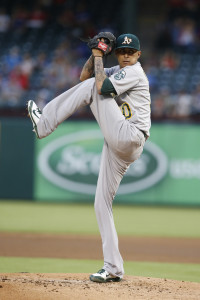
Chavez wraps up his career just shy of his 42nd birthday, which is less than a month away. He had an incredibly unique career in terms of the miles he traveled and jerseys he wore over the years. As detailed by Matt Monagan of MLB.com in 2022, Chavez is the most traded player in history, having been flipped ten times.
He was initially drafted by the Cubs in the 39th round of the 2001 draft but decided to go to college. Then the Rangers took him in the 42nd round the year after and got him to sign. The draft is now only 20 rounds in length but was obviously longer back then.
Prior to making it to the majors, he was traded for the first time, getting sent to the Pirates for Kip Wells in 2006. He made his major league debut with that club in 2008, tossing 15 innings with a 6.60 earned run average. He stuck with the Bucs through 2009 but then before the 2010 season was flipped to the Rays for Akinori Iwamura and then to the Braves for Rafael Soriano. His first stint with Atlanta lasted just a few months, as he was traded to the Royals at the deadline alongside Gregor Blanco and Tim Collins for Rick Ankiel and Kyle Farnsworth.
He stuck with the Royals through the 2011 season before being put on waivers, when the Blue Jays claimed him. In August of 2012, he was traded to the Athletics in exchange for cash considerations.
At the end of the 2012 season, Chavez still hadn’t had a lot of major league success. He had a 5.99 ERA in 177 1/3 innings. The move to Oakland seemed to work out well for him. In 2013, he tossed 57 1/3 relief innings with a 3.92 ERA. He got stretched out for a rotation role and performed well. He logged 303 innings over the 2014 and 2015 seasons with a 3.83 ERA.
Going into 2016, he was traded back to the Blue Jays, with Liam Hendriks sent the other way. That second stint with the Jays lasted just a few months, as he was flipped to the Dodgers for Mike Bolsinger ahead of the 2016 deadline. Both of those clubs kept in him relief and he had a 4.43 ERA that year.
He reached free agency for the first time ahead of the 2017 season and signed a one-year, $5.8MM deal with the Angels. The Halos stretched him back out but the results weren’t great, with a 5.43 ERA through July. He was moved back to the bullpen and had a slightly better 4.94 ERA the rest of the way.
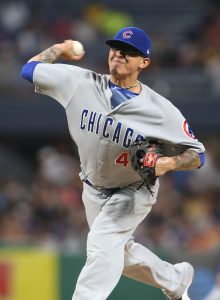 Going into 2018, he signed a one-year, $1MM deal to return to the Rangers, the first organization he signed with. That turned out to be one of his best seasons. He was traded the Cubs for Tyler Thomas at the deadline and finished that year with a 2.55 ERA. He got to make his first postseason appearance with the Cubs, tossing a scoreless inning in the Wild Card game against the Rockies, but the Cubs ultimately lost in 13 innings.
He returned to free agency and signed with the Rangers yet again, this time on a two-year deal worth $8MM. That deal didn’t work out quite as well, as he posted a 5.21 ERA over those two seasons.
He had to settle for a minor league deal with Atlanta going into 2021, but he showed he still had something left in the tank. He was able to to throw 33 2/3 innings in the majors that year with a 2.14 ERA. He cracked the postseason roster and tossed 6 1/3 scoreless innings as Atlanta won it all, getting Chavez a World Series ring.
He signed a minor league deal with the Cubs going into 2022 and got a brief stint on their roster before getting flipped back to Atlanta for Sean Newcomb. A few months later, he and Tucker Davidson were flipped to the Angels for Raisel Iglesias.
In the latter years of his career, he always seemed to wind up back in Atlanta. Even after being traded away in August of 2022, he was back in Atlanta via waivers a few weeks later. Via further minor league deals, he ended up tossing 34 2/3 innings in 2023 with a 1.56 ERA and then 63 1/3 innings last year with a 3.13 ERA. This year, his time on the roster has been more limited, with eight innings and eight earned runs allowed.
In the end, Chavez played in 18 seasons for nine different teams, getting traded ten times. He got into 657 games and tossed 1,142 innings with a 4.27 ERA. He had a 51-66 win-loss record, nine saves and 76 holds. Baseball Reference lists his career earnings above $25MM. We at MLB Trade Rumors salute him on his incredibly long and winding career and wish him the best with the next phase of his life. Based on his comments above, it sounds like maybe he’ll turn up in a coaching role in the future.
Photos courtesy of Kelley L Cox, Tim Heitman and Charles LeClaire, Imagn Images
Padres Among Teams Interested In Sandy Alcantara
As the Padres gear up for a deadline that seems like it’ll see them operate on both the buying and selling side of the market, they’ve reached out to the Marlins to inquire about right-hander Sandy Alcantara, reports Dennis Lin of The Athletic.
San Diego’s interest in Alcantara comes less than 24 hours after it was reported that they’ve been willing to discuss fellow righty Dylan Cease with other clubs. Lin adds that he’s heard similarly. Both right-handers have underperformed this season but feature strong track records and power arsenals. Shipping out an underperforming former Cy Young finalist to bring in an underperforming former Cy Young winner might seem like shuffling the deck chairs, but there’s typically a method to president of baseball operations A.J. Preller’s deadline madness.
Cease is earning $13.75MM in his final season of club control before reaching free agency. Alcantara is earning $17MM this season and is signed for the same amount in 2026, with a $21MM club option for the 2027 season. If the Padres were to trade Cease and acquire Alcantara, they would essentially be swapping out — not directly for one another, of course — two pitchers of comparable upside but coming away with the one who provides rotation stability beyond the current season.
As ever, there are roadblocks to be considered. The Padres’ baseball operations staff isn’t believed to have much financial flexibility at its disposal presently. That was a key driver in their frugal slate of offseason signings (e.g. Jason Heyward, Connor Joe, Elias Diaz, Martin Maldonado, Jose Iglesias), and it’s also a factor in why they’re listening to offers on Cease in the first place.
Even if they were to trade Cease and the entirety of his remaining salary, turning and adding Alcantara would add about $1.153MM onto the current payroll — and do so at a time when the Padres are also looking for help in left field and behind the plate. That said, the Marlins were willing to pay down virtually all of Luis Arraez‘s salary when they lined up with the Padres on a May 2024 trade. Doing so allowed Miami to ask for more talent in exchange and allowed the Padres to get the player they coveted even in the face of payroll constraints from ownership. They could try a similar path here.
That brings up a potentially even more prominent roadblock: a thin farm system. San Diego’s prospect cache has been repeatedly leveraged to acquire veteran players over the years and left the team with a top-heavy system. Shortstop Leo De Vries and catcher Ethan Salas are considered among the sport’s very best young talents. The Padres are ostensibly loath to part with either, and the rest of the system is less compelling.
Trading Cease could help in that regard. Even with the right-hander falling shy of his prior standards this season, he’s still averaging better than 97 mph on his heater and missing bats at an elite level. He’d surely command a notable return. It’s possible Cease could be swapped out for big league help at another position of need (e.g. the previously referenced left field or catcher), but a contending club would likely be reluctant to give the Padres a big league outfielder or catcher in exchange for a rental arm. A trade for prospects would be more straightforward, and because the Padres are a luxury tax payor, there’s incentive to move him rather than make a qualifying offer. Their CBT status would drop the compensation for Cease from a pick after the first round to a pick after the fourth.
Speculatively speaking, the Padres can look to find a trade partner for Cease while in the same breath using some of that return to help pry Alcantara loose from Miami. They could potentially even structure it as a three-team trade, though that’s not necessary. They went through a similar sequence in the 2023-24 offseason when trading Juan Soto to the Yankees for a prospect package headlined by right-hander Drew Thorpe, only to turn and trade Thorpe to the White Sox a couple months later as part of the package to acquire Cease.
Adding Alcantara would be of extra importance to the Padres because of that remaining club control. Both Cease and Michael King are free agents at season’s end. Next year’s rotation outlook currently includes Nick Pivetta, Yu Darvish (in his age-39 season), Joe Musgrove (in his return from Tommy John surgery) and some combination of Randy Vasquez, Stephen Kolek and Ryan Bergert. Pivetta can opt out of his contract after the 2026 season.
Whether some form of Cease/Alcantara shell game comes to fruition or not, the mere fact that the Padres are looking into the possibility serves as a prominent reminder of the type of frenetic dealing that has become a hallmark of the Preller-led Padres this time of year. With several holes on the roster, a tight payroll and a farm system that could work against them, the stage appears to be set for another July of creative dealing from the Padres.
Rays Option Taj Bradley
The Rays optioned Taj Bradley to Triple-A Durham after tonight’s rough start against the White Sox, reports Marc Topkin of The Tampa Bay Times. They’ll presumably announce that decision and a corresponding roster move tomorrow. Joe Boyle, who has been working in long relief, stands as the obvious candidate to step into the rotation.
Bradley didn’t make it out of the second inning tonight. He gave up four hits and three walks, allowing four runs in an inning and two-thirds. That promptly erased a four-run lead that the Rays had built in the bottom of the first. They took the lead back in the middle frames before an eighth-inning implosion by setup man Kevin Kelly led to an 11-9 defeat to the American League’s worst team.
This pushed Bradley’s season earned run average to 4.61 across 111 1/3 innings. The 24-year-old righty has a slightly below-average 20.2% strikeout rate against a 9.3% walk percentage. Leading up to tonight, he was coming off two of his best outings of the season. Bradley blanked the Orioles over six innings with as many strikeouts in his first start out of the All-Star Break. He’d closed the first half with six innings of one-run ball against Boston.
Bradley has been in Kevin Cash’s rotation all season. This is his first optional assignment since the end of 2023. Boyle, who was one of five relievers called upon tonight, worked three innings of one-run ball. He carries a 1.42 ERA in 19 innings over five MLB appearances. Acquired from the A’s in the Jeffrey Springs trade, Boyle has a huge arm but has struggled with command throughout his career.
The 25-year-old has seemingly taken a step forward in that regard this year. He walked 10.8% of batters faced across 15 Triple-A outings. That’s still higher than average but much more tolerable than the 17-20% range at which he’d sat for most of his minor league career. Boyle fanned 33% of Triple-A opponents with a 1.85 ERA while working from Durham’s rotation.
Bradley’s demotion one week before the deadline is interesting. USA Today’s Bob Nightengale reported a couple weeks ago that the club was open to offers on Bradley. ESPN’s Jeff Passan similarly wrote this morning that the one-time top pitching prospect is available in trade discussions. Bradley is likely still a season away from arbitration and under club control for four years beyond this one. If the Rays don’t trade him, they’ll need to keep him in Durham for at least 15 days unless he’s brought up to replace someone who is going on the injured list.
Padres Have Discussed Dylan Cease With Several Teams
The Padres have spoken to several teams about the possibility of trading right-hander Dylan Cease, reports ESPN’s Buster Olney. The Cubs, Mets and multiple AL East clubs have had some talks with San Diego, per the report. Separately, Olney’s colleague Jeff Passan also suggests that Cease has come up in trade talks, though that’s framed as other clubs approaching the Padres and not expressly being turned away.
Whether the Padres have initiated talks or whether they’re simply hearing other teams out, the possibility of trading Cease speaks to multiple challenges for San Diego over the next week-plus. The Friars’ farm system is not particularly well regarded beyond its top two prospects, and the team is ostensibly reluctant to part with either Leo De Vries or Ethan Salas. That leaves the Padres with a fairly light slate of prospects from which to deal.
Talks surrounding Cease could also reflect what looked to be the case in the late stages of the offseason: the Padres’ baseball operations staff does not appear to have much financial firepower at its disposal. The new-look ownership structure hasn’t been as keen to spend as the late Peter Seidler. They’re still well north of the luxury tax threshold, but the team’s actual cash payroll is down considerably from its 2023 peak.
The Padres’ late-offseason dealings put a spotlight on that lack of resources. Nick Pivetta‘s four-year, $55MM deal pays him just $4MM in the first season of the contract. Catcher Elias Diaz ($3.5MM), lefty Kyle Hart ($1.5MM) and outfielders Connor Joe ($1MM) and Jason Heyward ($1MM) signed one-year contracts valued at a combined $7MM. Their other late additions included minor league deals for Yuli Gurriel, Gavin Sheets, Jose Iglesias and Martin Maldonado. Each cracked the big league roster at the end of camp, but Iglesias’ $3MM base salary was the largest of the bunch.
Trading Cease while still aiming to contend might seem counterintuitive, but the Padres could accomplish multiple goals, in theory. He’s an impending free agent who’s earning $13.75MM this season with about $4.95MM of that sum yet to be paid out. Trimming nearly $5MM off the books would create a decent bit of money to pursue upgrades behind the plate, in left field and perhaps on the bench — all areas of need. It’d also net some prospects of note, any of whom could subsequently be flipped to another team to address various needs on the roster.
Of course, moving Cease would also further deplete a perilously thin rotation. Michael King has been out nearly two months due to shoulder inflammation, and Joe Musgrove is out all season following last year’s Tommy John surgery. With Cease out of the picture, the Padres would be left with Pivetta, Yu Darvish, Stephen Kolek, Randy Vasquez and rookie Ryan Bergert in the rotation — at least until King returns. It’s not a great group, and the depth beyond it is shaky at best.
To that end, Olney further reports that even while discussing Cease, the Padres have been in contact with the Orioles about right-hander Charlie Morton, who’s widely expected to be traded between now and July 31. Morton’s $15MM salary is even larger than that of Cease, so presumably the Padres would be interested only if the Orioles were to include cash to offset a portion of the deal (likely enough so San Diego would owe a good bit less than the $4.95MM left on Cease’s contract).
Morton got out to a terrible start this season but has posted terrific numbers over his past 12 appearances overall (even including a seven-run hiccup his last time out). Since May 10, he’s posted a 3.47 ERA with a 25.9% strikeout rate, a 7.7% walk rate and a 44.2% grounder rate. Metrics like FIP (3.30) and SIERA (3.49) generally support his resurgence. Over that span, Morton has actually outpitched Cease, though Cease’s power arsenal, track record and sustained ability to miss bats would still hold greater appeal to most clubs on the lookout for rotation upgrades.
Cease hasn’t had his best season but has been generally solid since a catastrophic nine-run drubbing in his third start of the year. Dating back to April 14, Cease has pitched 99 innings with a 4.09 ERA, a 30% strikeout rate and an 8.6% walk rate. His swinging-strike rate in that time is nearly 17% — a massive mark — and he’s averaging better than 97 mph on his heater. He’s had some struggles with runners on base this year and at least a little bit of batted-ball misfortune (.319 compared to his .290 mark entering the season), but Cease is still throwing hard, missing bats at a plus rate and limiting walks at an average clip. For any of the Cubs, Mets or any AL East contender, he’d very likely step right into a theoretical playoff rotation, barring a late injury or substantial downturn in results.
Guardians Open To Offers On Shane Bieber
The Guardians have made rehabbing right-hander Shane Bieber available, reports Jeff Passan of ESPN. The 2020 AL Cy Young winner has yet to pitch in the majors this season after undergoing Tommy John surgery last April but is currently on a minor league rehab assignment.
Bieber, 30, signed a two-year, $26MM contract to remain with Cleveland after that ill-timed injury. He can opt out of the contract at season’s end, which only further muddies a complicated trade scenario. Bieber is owed the balance of a $10MM salary and at least a $4MM buyout on a $16MM player option for the upcoming season.
Cleveland had hoped that Bieber would be back on a big league mound by now. He originally embarked on a minor league rehab assignment on May 31 but felt some soreness that caused the Guards to pull him from that rehab stint and slow his return process. That initial soreness didn’t prove to be any kind of significant recurrence of injury, as Bieber’s now back on the mound. He made the second start of his current rehab stint last night with High-A Lake County. He’s pitched five innings and held opponents to a run with a 9-to-1 K/BB ratio on this rehab stint. Bieber also tossed 2 1/3 shutout innings with five strikeouts back in that May 31 appearance.
Bieber made only two starts in 2024, his final season of club control in Cleveland, before incurring his injury. He tossed 12 shutout innings and struck out a comical 20 of his 45 opponents (44.4%) against just one walk (2.2%). Fifty percent of the balls put in play against him were grounders. Also encouraging was the fact that his average fastball had ticked back up to 92 mph after sitting 91.3 mph in each of the past two seasons. His heater had been particularly limited in April in the 2022-23 seasons, sitting under 91 mph in both. That made the velo uptick all the more encouraging. It was a sample of just two starts, but it’s hard to draw up a better beginning to a pitcher’s walk year — or a worse finish than what quickly transpired thereafter.
It’s hard to know what to expect from Bieber at this point. Scouts figure to keep a particularly close eye on his remaining rehab starts as a result. Not only is Bieber recovering from Tommy John surgery, he’d pitched with diminished results in 2023 due to elbow troubles. He tossed 128 innings in 2023 and logged a 3.80 ERA with a career-low 20.1% strikeout rate.
At his best, Bieber is a frontline starter capable of dominating any lineup in baseball. From 2020-22, he pitched 374 innings with a 2.70 ERA, a 30.4% strikeout rate, a 6% walk rate and a 47.2% ground-ball rate. Those rate stats all range from good to excellent, and fielding-independent metrics were similarly bullish on Bieber’s success (2.75 FIP, 3.04 SIERA). He looked like more of a third or fourth starter in 2023 while working with career-low velocity, and now he’s coming off a major surgery with at least one minor setback. He’s an enigma, to say the least.
The player option for the 2026 season makes him all the more difficult to value. If Bieber is activated within the next two to three weeks and pitches even competently down the stretch, he’s sure to decline a net $12MM player option in favor of a return to free agency. If he pitches poorly and/or encounters further injury woes, he’d likely pick up that player option and stick his new club with a $16MM salary it’d prefer not to have on the books.
Given all those layers, the Guardians may not extract the sort of return that would typically be commensurate with a brand-name pitcher of this caliber. Bieber stands as a high-upside play but one who comes with plenty of risk as well. A trade shouldn’t be seen as a given, particularly not with Cleveland riding a three-game win streak that’s put them back to .500 and within 2.5 games of a Wild Card spot in the American League. But Bieber’s next rehab outing and the Guardians’ play in the next week merit a watchful eye, as a healthy Bieber could be a major boon for a contender’s staff — whether that’s the Guardians themselves or a theoretical trade partner.
Cardinals Designate Erick Fedde For Assignment
11:22am: The Cardinals have announced the moves.
11:17am: The Cardinals have designated struggling right-hander Erick Fedde for assignment, reports Katie Woo of The Athletic. Right-hander Andre Granillo is being recalled from Triple-A Memphis to take his spot on the roster, MLB.com’s John Denton adds.
A year ago, the resurgent Fedde was one of the most sought-after arms on the trade market. A former first-round pick and top prospect with the Nationals, he’d struggled for several injury-marred years in the majors before reinventing himself with an MVP-winning season in the Korea Baseball Organization. The White Sox signed him to a two-year, $15MM contract and received excellent value, as Fedde posted a 3.11 ERA in 21 starts for them before being traded in a three-team deal that brought Miguel Vargas and prospects Alexander Albertus and Jeral Perez. The Cardinals parted ways with utilityman Tommy Edman.
Fedde was solid but not quite as effective for the Cardinals down the stretch. Heading into the 2025 season, his $7.5MM salary looked like a bargain after he’d posted a combined 3.30 ERA, 21.2% strikeout rate and 7.2% walk rate in 177 1/3 innings between St. Louis and Chicago. With the Cardinals announcing an intent to take a step back to focus on player development and give young players an opportunity, Fedde looked like an obvious offseason trade candidate.
Instead, St. Louis wound up holding onto Fedde in hopes of getting some first-half innings and flipping him at the deadline. It now represents a missed opportunity. The Cards still have five days to trade him for a nominal return, but the legitimate trade value that Fedde had in the offseason has dried up with a shaky season that’s had a few highlights but far more low points.
Even early in the season, when Fedde was sporting a solid earned run average, his rate stats told another story. The right-hander’s strikeout rate has plummeted this season, while his walk rate has crept up. Fedde was masterful in a May 9 shutout of the Nationals, wherein he allowed just six hits and no walks against eight punchouts. He followed that with 5 2/3 shutout frames against a tough Phillies lineup, albeit with four walks against three strikeouts.
Much of the season has been a tightrope walk for Fedde due to his worsened command and diminished ability to miss bats, but the wheels really came off beginning in late June. Fedde served up seven runs in back-to-back starts on June 25 and 30. His results have only worsened since. Over his past five starts, he’s been shelled for 26 runs on 33 hits and 11 walks with only eight strikeouts through 17 2/3 innings.
Fedde is being paid $7.5MM this season. He still has about $2.7MM of that sum yet to be paid out. No team is going to claim his salary if he’s placed on waivers. The Cardinals will have five days to try to trade him, though they’ve presumably already been looking for matches and haven’t lined up on anything. If they’re willing to eat the rest of that salary, perhaps a team will take a low-risk flier on Fedde, but there’s a real chance he’ll simply be released. At that point, he’d be free to sign with any team and would only cost his new club the prorated league minimum for any time spent on the major league roster.
With Fedde out the door, the Cardinals will clear a permanent rotation spot for prospect Michael McGreevy. The 2021 first-rounder has pitched 28 1/3 MLB frames this year and logged a 3.49 ERA with a minuscule 2.7% walk rate. McGreevy’s 15.2% strikeout rate is one of the lowest in baseball, although he’s punched out 25.5% of his Triple-A opponents, so there’s clear upside for more missed bats. Add in that he’s also sporting a tidy 4.9% walk rate in Memphis, and it’s not hard to see why St. Louis is keen on getting him a look. The hope had been to trade Fedde for some minor league talent but that seems quite unlikely given the extent of the veteran’s struggles.
Isaac Paredes Has “Pretty Significant” Injury; Astros Could Pursue Additional Bat
Astros third baseman Isaac Paredes went on the injured list with a strained hamstring over the weekend, and manager Joe Espada last night suggested that the 26-year-old slugger won’t be back anytime soon. Espada called Paredes’ hamstring issue “pretty serious” and added that while the team is still awaiting further testing results before an official diagnosis and recovery timetable is provided, the injury is “definitely something that’s going to keep him out for a while” (link via Matt Kawahara of the Houston Chronicle). Espada could not definitively say whether Paredes would return this season.
It’s yet another brutal injury blow to an Astros club that has somehow weathered an avalanche of health troubles to sit atop the AL West. Houston has only gotten 29 games out of Yordan Alvarez this year due to an ongoing hand injury that was originally diagnosed as inflammation before the team eventually revealed he’s dealing with a small fracture. Jeremy Peña‘s breakout season was interrupted by a broken rib in late June. He’s missed nearly a month. Outfielders Jake Meyers, Chas McCormick and Jacob Melton have spent time on the injured list; Meyers and Melton are there presently.
The pitching side of the coin has been even worse. Ronel Blanco and Hayden Wesneski both required Tommy John surgery by early June. Spencer Arrighetti hasn’t pitched since early April after suffering a fluke injury when he was playing catch in the outfield during batting practice and was struck by a batted ball. Luis Garcia‘s rehab from 2023 Tommy John surgery is now up to well over two years in the making after some early-season setbacks.
Houston has persevered through it all, improbably sitting 17 games over .500 thanks in no small part to dominant pitching performances from Hunter Brown, Framber Valdez, Josh Hader, Bryan Abreu and several unexpected contributors (e.g. Bennett Sousa, Steven Okert, Shawn Dubin, Ryan Gusto, Brandon Walter, Colton Gordon). They’ve also enjoyed career-best performances at the plate from Meyers, Mauricio Dubon and catcher Victor Caratini.
Paredes has been a huge part of the team’s success, however, playing in 94 of 101 games and batting .259/.359/.470 with a team-leading 19 home runs. He hasn’t singlehandedly replaced Kyle Tucker‘s bat in the lineup, but Paredes and Cam Smith — both acquired in the Tucker return — have provided above-average offense throughout the season.
With Paredes sidelined indefinitely, Chandler Rome of The Athletic reports that the Astros are now likelier to target an additional bat than they were prior to the injury. Houston had been looking around for a left-handed bat who could help at second base, but GM Dana Brown’s primary focus had been on improving his strained pitching depth.
It creates a fascinating dynamic for the Astros. Over the winter, it was clear that owner Jim Crane was only interested in exceeding the luxury tax threshold for what would be a second straight season in very specific cases (namely, if it meant re-signing Alex Bregman at their price — not his). Trades of Tucker and Ryan Pressly helped keep the team’s CBT number under the $241MM first-tier threshold even as they brought in free agent Christian Walker on a three-year contract. The April trade of Rafael Montero to the Braves — in which they surprisingly found a taker for a portion of his underwater contract — spared the Astros just under $3MM of his salary and created a bit more breathing room. That could wind up being pivotal if Crane remains intent on avoiding the luxury tax.
RosterResource projects the Astros for about $235.5MM worth of CBT considerations — just $5.5MM shy of the threshold. Cot’s Contracts is a bit more bearish at $238.9MM. Both of those are estimates, as the exact calculations of CBT spending are not all publicly available. But they still paint a generally similar picture: the Astros have minimal wiggle room with which to operate if keeping that number under $241MM is still a priority.
The Astros could always convince a trade partner to pay down some of a new acquisition’s salary, but doing so would require paying an increased price in terms of prospects. Houston’s farm system is not well-regarded, though their player development staff continues to churn out players (particularly pitchers) who exceed industry expectations. If the team needs to stay under the $241MM level, finding pre-arbitration players would be one path to explore, though the prices on those players will be notable.
The Mets are open to dealing from their infield depth (including lefty-swinging third baseman/second baseman Brett Baty), presenting one possible path. Tampa Bay speedster Jose Caballero is a below-average hitter who bats from the right side of the dish but is a plus defender with 32 stolen bases already. He’s reportedly drawn trade interest. Houston could also look to buy low on a former top prospect like Minnesota’s Edouard Julien or the Cardinals’ Nolan Gorman. Julien is hitting well in Triple-A but has slipped down the organization’s depth chart. Gorman is out with a back injury at the moment but has provided average offense for the Cards. The St. Louis infield picture is getting more cluttered, however, and Gorman could be squeezed out when top prospect JJ Wetherholt is ready for a big league look. Those are speculative examples, to be clear, but that’s the type of move that could provide some infield help while managing CBT limitations.
Another alternative would be trading from the big league roster to try to free up a bit more financial freedom. The previously mentioned McCormick is making $3.4MM and doesn’t have a starting role, especially when Meyers returns. Trading him would trim about $1.22MM from the CBT bill (as of this writing, though that number will drop incrementally as the deadline draws nearer). One way or another, Houston will be one of the more interesting clubs to track between now and next week’s trade deadline.
Lock In A Lower Price On Trade Rumors Front Office Now!
In recent weeks, Trade Rumors Front Office subscribers have enjoyed team-by-team deep dives in our new Trade Deadline Outlook series. We’re happy to be able to provide that type of longer-form original content. It’s your support that makes it happen. If you’re on the fence about a Trade Rumors Front Office subscription, consider that we offer a 100% money-back guarantee. You have nothing to lose, yet requests for refunds have been rare because we’re providing great value for your $29.89 per year or $2.99 per month. You can view all the benefits as well as subscriber testimonials here.
As I mentioned in June, those prices have been in place for five years now. Due to unfavorable trends regarding ad rates and traffic, in August we are enacting our first-ever price increase to $34.99 per year or $3.99 per month. That’s still a great deal!
However!!! You can still lock in the old price of just $29.89 per year, for a full three years! That’s over $15 in savings! Anyone who signs up for Trade Rumors Front Office prior to 8-1-25 and keeps auto-renewal on will enjoy the grandfathered $29.89 annual price until 8-1-28! You’ve got only ten days left to do this.
Sign up right now so you can enjoy the site without ads, indulge in exclusive articles and chats every week, and use cool tools like our MLB Contract Tracker. We don’t do sales, but grandfathering in for three years at the old price is about as close as it’s going to get.
Steve Adams, Anthony Franco, Darragh McDonald, Mark Polishuk, Nick Deeds, and Leo Morgenstern are gearing up for another exciting MLB trade deadline on July 31st, and I’ll be helping out as well. It’s all hands on deck here as MLBTR prepares for its 20th trade deadline. We’ve come a long way since I was flying solo on MLBTR’s trade deadline coverage 20 years ago and the Dodgers were adding guys like Julio Lugo and Greg Maddux. MLBTR is now better than ever, and I appreciate everyone who is still along for the ride (whether paid or ad-supported).
Mariners, D-backs Have Discussed Eugenio Suárez
The Mariners are among the teams with interest in Diamondbacks third baseman Eugenio Suárez, reports Jon Heyman of the New York Post. Adam Jude of the Seattle Times further reports that Suárez is viewed as Seattle’s top target in its well-known search for a corner infield upgrade. Jude adds that the Mariners and D-backs have held “preliminary” discussions regarding Suárez, whom Seattle views as a preferable option to Arizona first baseman Josh Naylor.
[Related: Seattle Mariners Trade Deadline Outlook]
The 34-year-old Suárez has emerged as perhaps the most coveted bat on the trade market. He’s hitting .257/.328/.605 with 36 home runs on the season and has been among the sport’s elite power hitters dating back to his July renaissance in 2024. It’s easy to forget now, given how dominant Suárez has been at the plate over the past calendar year, but the beginning of the slugger’s time in Arizona was a disaster. He hit so poorly through the season’s first two-plus months that he began to lose playing time to young Blaze Alexander. That shift didn’t last long, as Suárez caught fire while Alexander stumbled.
Dating back to June 25 of last season, Suárez has come to the plate 751 times and slashed .281/.341/.605 with a whopping 60 home runs, 36 doubles and a triple. Only Aaron Judge and Shohei Ohtani have hit more home runs in that time (66 apiece). Suárez has bludgeoned left-handed and right-handed pitching alike. He’s being paid $15MM this season, with about $5.48MM of that sum yet to be paid out as of this writing. He’ll be a free agent at season’s end.
It’s not entirely clear yet that the Diamondbacks will trade Suárez at all, however. They swept the Cardinals in their first series coming out of the All-Star break, and though they lost to the Astros last night, they’re now just one game under .500 and 5.5 games back in the NL Wild Card chase. The Snakes have two more games against Houston before wrapping up their pre-deadline slate of games with three games in Pittsburgh and three games in Detroit.
Arizona general manager Mike Hazen has made clear that he hopes to avoid a sell-off and act as a buyer at this year’s deadline, but the team will have to perform well enough in this final push to justify that position. The Diamondbacks can also make a qualifying offer to Suárez if they hang onto him, so any trade return would need to eclipse the value of what would likely be a compensatory pick after the first-round of the 2026 draft.
[Related: Arizona Diamondbacks Trade Deadline Outlook]
If the Diamondbacks do end up seriously weighing offers for Suárez, a trade seems like a better outcome than that draft pick, however. The D-backs will likely take aim at contending again next season, and Suárez could net them some talent that can contribute either late this season or early next year. The draft selection would be a longer-term play, of course.
In theory, the Diamondbacks could even trade Suárez while still hoping to remain in contention this year. There’s no replacing his prodigious power output, but top prospect Jordan Lawlar could step into the everyday third base role down the stretch. Lawlar hasn’t hit at all in a tiny sample of 56 big league plate appearances, but he’s never been given any sort of regular playing time, either. He’s decimated Triple-A pitching this year, hitting .319/.410/.583 in 250 plate appearances. He’s currently on the minor league injured list with a hamstring strain but should return shortly after the deadline. Whether it’s this year or next, the 2021 No. 6 overall draft pick seems likely to get the opportunity to prove that he can be Arizona’s long-term option at the hot corner.
If the D-backs sell any veterans — Suárez or otherwise — they’re expected to focus on stockpiling young pitching. On the surface, that might sound like it makes Seattle a particularly appealing trade partner. However, the M’s aren’t going to trade an established starter like Logan Gilbert, Bryan Woo or George Kirby for a rental, and outside of young Logan Evans, most of their higher-end pitching prospects (e.g. Ryan Sloan, Jurrangelo Cijntje) are further down the pipeline.
That’s not to say the two sides can’t line up on a deal. At the end of the day, talent wins out, and if the Mariners offer a demonstrably better package than the Yankees, Cubs and other suitors, the positions of the prospects won’t be crucial. Arizona could look to flip some of those prospects for established big league arms in the offseason, after all. But if the D-backs are weighing two offers they deem to be comparable in value, it seems likely that they’d gravitate toward one that included some pitching talent that could be in the majors before terribly long.
The Diamondbacks lost Corbin Burnes to Tommy John surgery last month. He won’t pitch until late in the 2026 season, at the earliest. Zac Gallen and Merrill Kelly are free agents at season’s end. In-house arms like Blake Walston and Tommy Henry also had UCL surgeries earlier this season. Young righty Cristian Mena has been out since June with a shoulder strain. Top pitching prospect Yilber Diaz has had a disastrous season in the minors. Big league starters Brandon Pfaadt and Eduardo Rodriguez have both struggled. Adding some young arms is a sensible aim for the D-backs front office if they go the sell route in the coming week-plus.
The Mariners, of course, traded Suárez to the D-backs in the first place. That trade, following the 2023 season, was largely driven by a mandate from Seattle ownership to reduce payroll. The Mariners did come away from that swap with righty Carlos Vargas, who’s now a key member of the bullpen (47 innings, 3.83 ERA, 11 holds), but the front office surely would’ve preferred to hold onto the slugger and his vaunted clubhouse presence if not for those financial constraints. Mariners ownership is now reportedly willing to boost payroll, putting a reunion back on the table.
Twins More Seriously Listening To Offers On Rental Players
The Twins have stumbled out of the gate with a 1-3 record in the second half and are beginning to more seriously weigh trades of their short-term players, reports Jon Heyman of the New York Post. Utilityman Willi Castro, outfielder Harrison Bader and left-handed reliever Danny Coulombe are the team’s three most appealing free agents, but the Twins also have righty Chris Paddack, first baseman Ty France and backup catcher Christian Vazquez set to hit the market at season’s end.
[Related: Minnesota Twins Trade Deadline Outlook]
Of course, more of the focus for contending clubs will be on Minnesota’s more controllable and higher-profile talents. Top starter Joe Ryan and high-leverage relievers Jhoan Duran and Griffin Jax will draw widespread interest. Heyman notes that Twins brass won’t turn interested clubs away without hearing them out, but the they would understandably need to be bowled over to consider moving anyone from that group. All three pitchers are controlled for two additional seasons beyond the current campaign.
Among the rental players, Castro fits the broadest number of teams, given his versatility. The 28-year-old switch-hitter is enjoying a nice season at the plate, hitting .258/.350/.435 with 10 homers, 14 doubles, two triples, eight steals (ten attempts) and a career-best 10% walk rate. He’s been productive from both sides of the dish, has above-average speed (74th percentile, per Statcast) and is capable of playing second base, shortstop, third base and the outfield (although defensive metrics have panned his work at shortstop and in center). Castro is earning $6.4MM, making him affordable for virtually any contender.
Bader’s defensive excellence and bounceback year at the plate ought to garner plenty of interest as well. He’s hitting .249/.330/.438 as Minnesota’s primary left fielder, but he’s only in left because of Byron Buxton‘s presence in center. Bader still grades out brilliantly at any outfield slot, and while he’s typically showed notable platoon splits, he’s posted nearly identical numbers against righties and lefties alike in 2025. By measure of wRC+, Bader has been 15% better than average at the plate. He’s sporting his highest walk rate in a 162-game season since 2019 and hitting for more power than he has since 2021 (12 home runs, 11 doubles, .189 ISO in 282 plate appearances). He’s on a one-year, $6.25MM contract with a mutual option that obviously won’t be exercised by both parties.
Coulombe has been quietly terrific. He missed three weeks earlier in the season with a forearm strain but has shown no ill effects. His 0.65 ERA in 27 2/3 frames is the best in baseball among the 433 pitchers who’ve tossed at least 20 innings, and Coulombe has fanned 26.9% of his opponents against a 6.5% walk rate. He doesn’t throw hard (90.2 mph average fastball) and isn’t going to make it the whole season without surrendering a home run — he’s currently yet to do so — but there aren’t many better left-handed options on the market. He’s playing on a one-year, $3MM contract.
The rest of the Twins’ rental options have some track record but are in the midst of poor seasons. Paddack still has good command, but he’s sitting on a 5.14 ERA and career-worst 16.4% strikeout rate. He had a nice run from mid-April to mid-June, but Paddack has never really held up for a whole season under a starter’s workload and has been hit hard since mid-June. He looked impressive in relief when he came back from Tommy John surgery in 2023 and is making a relatively affordable $7.5MM this season, so perhaps a club might roll the dice on him as a bullpen option. Otherwise, his appeal as a fifth starter is fairly limited.
France had a nice start but has seen his role decrease and is now mired in an awful 5-for-41 slump that’s dropped his previously solid batting line to .245/.309/.348. He’s not striking out and has played a strong first base, but he’s a bat-first player who’s in his third straight down year at the plate. France’s $1MM salary is low enough that another club could well roll the dice on adding him to its bench, but he’s not going to net the Twins anything of substance in a trade.
The 34-year-old Vazquez is in the final season of a three-year, $30MM contract that hasn’t gone as hoped. He was always signed to be a glove-first catcher and remains a plus defender, but his once-passable offense has cratered and he’s been thoroughly outplayed by Ryan Jeffers, who has long since claimed the starting role in Minnesota. Vazquez’s .182/.249/.260 batting line in 159 plate appearances is among the least-productive in baseball. He’s still such a good defender that another club might take him on if the Twins ate most of the money he’s owed, but like France and Paddack, he’s not going to net a prospect of any real note.
There are other players the Twins could conceivably market. Right-handed reliever Justin Topa has pitched decently on a $1MM salary and has a cheap $2MM club option for the 2026 season. The aforementioned Jeffers is in his penultimate season of club control, but the Twins lack an heir apparent in the upper minors and starting catchers rarely change teams midseason. Trevor Larnach has been a roughly league-average bat at DH and in the outfield corners and is controlled two more seasons beyond the current one. Righty Brock Stewart has been excellent since the Twins signed him to a minor league deal a couple years back (2.44 ERA, 32.6 K% in 73 2/3 innings since 2022), but he’s frequently been injured. He’s being paid $870K and has two seasons of club control remaining. He could be a nice bullpen piece in future Twins seasons, but if a team is willing to make a decent offer, there could be some temptation to sell high as well.
One player clearly not going anywhere is Buxton. The 2025 All-Star is signed for three more seasons, has a full no-trade clause, and during last week’s All-Star break called himself a “Minnesota Twin for the rest of my life.”