
Aaron Judge Will Not Require Elbow Surgery; Rodón, Volpe Expected To Start 2026 On IL
Yankees manager Aaron Boone held a press conference today and provided some notable updates about players on the roster. Outfielder Aaron Judge will not require offseason surgery on his right elbow. However, left-hander Carlos Rodón underwent a procedure to remove loose bodies from his left elbow. He will be no-throw for eight weeks and will likely miss the start of next season. Shortstop Anthony Volpe, who had shoulder surgery this week, won’t be able to hit for four months and won’t be able to dive for six months. Chris Kirschner of The Athletic was among those to relay the updates (tweet one, two and three). General manager Brian Cashman also confirmed, per Greg Joyce of The New York Post, that Volpe will indeed start the season on the injured list.
The news on Judge is obviously good. He was diagnosed with a flexor strain in July. Though his stint on the IL was minimal, he was limited to designated hitter duties in August. This was a bit awkward, as it forced Giancarlo Stanton into the field, surely more than the Yankees had planned on. Judge gradually played the outfield more throughout September and into October.
If Judge had required Tommy John surgery or some other significant elbow operation, that would have had lingering impacts into the 2026 season, though it seems Judge will be expected to be a full-time outfielder again next year. That should allow the Yankees to go into 2026 planning on having Judge in right and Stanton in the DH slot.
The outfield will still be a focus this offseason, however. Trent Grisham is an impending free agent. Cody Bellinger is going to opt out of his contract and hit the open market as well. That leaves Judge and Jasson Domínguez as the two outfield holdovers. A former top prospect, Domínguez has yet to fully break out. 2025 was his largest stretch of big league playing time. He produced roughly league average offense with poor defense.
Per Kirschner, Boone expects Domínguez to be a regular with the Yanks next year but the skipper added the caveat that it depends what moves happen this offseason. The Yanks could pursue reunions with Bellinger and/or Grisham while the free agent market also features names like Kyle Tucker, Harrison Bader and Cedric Mullins. The trade market should feature names like Lars Nootbaar, Alec Burleson, Adolis García and others. Per Jack Curry of the YES Network, Cashman said he would love to have Bellinger back but the Yankees haven’t had any offseason discussions yet. Per Kirschner, Cashman says that prospect Spencer Jones has also put himself in the mix for a job next year, though that also depends on what happens in the offseason.
The Rodón news is obviously less pleasant. It doesn’t appear as though he’s slated for a huge absence, but the Yanks will go into the season with a few guys on the IL. Gerrit Cole had Tommy John surgery in March of last year. He should return at some point in 2026 but Boone confirmed today, per Kirschner, that Cole would not be ready by Opening Day. Clarke Schmidt had his own TJS in July and will be out well into the 2026 campaign.
Those arms could provide nice in-season boosts to the rotation but the Yanks will have to begin the campaign without them. As of right now, the Opening Day rotation projects as Max Fried, Luis Gil, Cam Schlittler and Will Warren. The Yankees will presumably look to bolster that before Opening Day. It’s possible they end up with a crowded group once Rodón and Cole get back on the mound but other injuries are fairly inevitable. The free agent market is headlined by guys like Framber Valdez, Tatsuya Imai, Dylan Cease and Ranger Suárez, while the trade market could feature MacKenzie Gore, Joe Ryan and plenty others.
As for Volpe, it seems Boone still views him as the shortstop once he’s healthy. “Yeah, he’s right in the mix to do that,” Boone said today, per Kirschner. Cashman also admitted today, per Bryan Hoch of MLB.com, that the shoulder issue was impacting Volpe during the season.
That’s backed up by the numbers. Volpe’s defensive metrics dropped significantly this year. He had six Defensive Runs Saved and 14 Outs Above Average in 2024 but 2 DRS and -7 OAA in 2025. His offense finished in a similar spot to previous seasons but he seemed to drop off a cliff once he suffered the injury. He had a .237/.328/.456 slash and 119 wRC+ through the end of April, just a few days before injuring his shoulder. He hit .205/.255/.374 for a 74 wRC+ from the start of May onwards.
Going into 2026, the Yankees could look to external options, though there aren’t surefire answers out there. The free agent market is headlined by Bo Bichette, who is an excellent hitter but a poor defender. Guys like Ha-Seong Kim and Trevor Story could be out there via opt-outs, though there are issues there as well. Kim is coming off a poor season after recovering from shoulder surgery. Story had a bounceback year after his own injury odyssey but he’s about to turn 33 and may not opt out anyway. CJ Abrams may be available in trade but he’s not a great defender either and the bat is inconsistent.
Perhaps the Yankees will let José Caballero hold the job until Volpe is healthy. Caballero played well after being acquired at the deadline. Braden Shewmake is on the roster as depth and the Yanks could bring in some veteran utility types.
Photo courtesy of Brett Davis, Imagn Images
Anthony Volpe Undergoes Shoulder Surgery
Anthony Volpe spent much of the 2025 season playing through a partially torn left labrum, and the Yankees shortstop addressed the problem in the form of a surgical procedure yesterday, according to Joel Sherman and Greg Joyce of the New York Post. The exact timeline for Volpe’s recovery isn’t yet clear, but if everything goes normally, a source tells Sherman/Joyce that Volpe would be ready for the start of the 2026 season.
The injury to Volpe’s non-throwing shoulder occurred in early May, when Volpe said he heard “a pop” in his shoulder after diving to try and snag a grounder. What seemed like a minor issue at the time ended up being a lingering source of discomfort throughout the season, and Volpe received two cortisone shots (one at the All-Star break, one in September) to try and manage the pain. The Yankees never placed Volpe on the injured list, but he didn’t play for the week following his second shot in September.
It is impossible to think that the injury didn’t contribute to Volpe’s tough season. He hit .212/.272/.391 with 19 home runs over 596 plate appearances, resulting in just an 83 wRC+. While these numbers weren’t far off what Volpe produced when healthy in 2023-24, it is worth noting that April (prior to the shoulder issue) was far and away Volpe’s best offensive month of 2025. The bigger impact may have come defensively, as Volpe dropped to -7 Outs Above Average and +2 Defensive Runs Saved — middling metrics for a shortstop who was a Gold Glove winner in 2023 and a finalist for the award again in 2024.
Volpe’s struggles made him a particular target for fan criticism in the Bronx, and something of an avatar for the fanbase’s frustrations towards GM Brian Cashman and manager Aaron Boone. There has yet to be any sign that Volpe’s starting job might be in danger, though Jose Caballero provided a big spark to the lineup after being acquired at the trade deadline, and getting a good dose of time at shortstop while Volpe was sidelined in September.
More will be known about Volpe’s recovery process in the coming weeks, but if he has any kind of setback, the Yankees could be encouraged to pursue at least a depth option at shortstop this winter if Caballero isn’t entrusted with the starting job. There will certainly be more speculation about whether or not the Yankees could land a bigger-name shortstop in a larger shake-up for the position, but it doesn’t feel like the Yankees would be inclined to move on entirely from Volpe, due to his former top-prospect status and the team’s three remaining years of control over his services. Volpe is arbitration-eligible for the first time this winter, and projected to earn $3.9MM in 2026.
Alex Bregman Will Opt Out Of Red Sox Contract
Alex Bregman will be opting out of his contract with the Red Sox, reports Jon Heyman of the New York Post. He has two years and $80MM remaining on his deal, although some of that money is deferred.
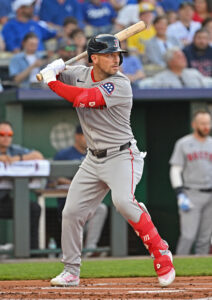
Bregman, 31, is coming off a strong season in which he batted .273/.360/.462 with a 125 wRC+ in 114 games for Boston. After posting an uncharacteristically low 6.7% walk rate in 2024, he rebounded to 10.3% in 2025, while his strikeout rate increased only modestly to a still-excellent 14.1%. His batted ball metrics back up his performance, with his 90.1 mph average exit velocity and 44.4% hard-hit rate both representing career highs. Despite missing seven weeks in the first half of the season with a right quad injury, Bregman was worth 3.5 fWAR this year, ranking seventh among major league third basemen with a minimum of 400 plate appearances.
Defensively, Bregman graded out as above average, if a step down from his 2024 season. In 972 1/3 innings at third base, he was worth one Defensive Run Saved and three Outs Above Average in 2025, with Statcast valuing his range in the 83rd percentile. For comparison, he was worth 6 DRS and 8 OAA with the Astros last year. Defensive metrics are notoriously tricky, of course, but it appears Bregman remains a defensive asset as he continues into his 30s.
By opting out, Bregman is forgoing two years at a $40MM AAV. That figure is somewhat misleading, though, as $60MM of the $120MM total is deferred through 2035-46, per Ronald Blum of the Associated Press, which lowers the contract’s AAV significantly. In any case, Bregman will undoubtedly look to top that guarantee in his second straight trip to the free agent market. Prior to this year’s quad injury, he had three consecutive seasons of good health from 2022-24 and is a reasonable bet to stay healthy moving forward.
Under the terms of the current Collective Bargaining Agreement between the owners and the MLB Players Association, Bregman is ineligible to receive a qualifying offer after receiving one from the Astros last offseason. A prospective team will not need to forfeit draft pick compensation to sign Bregman this time around. A look at our 2025-26 MLB Free Agents list shows Bregman as the clear headliner at third base, with Eugenio Suarez representing the next-best option. Suarez, 34, hit 49 home runs this season and matched Bregman’s 125 wRC+, but he’s three years older and an inferior defender.
Given the state of the market, his ineligibility for another qualifying offer, and his strong platform season, Bregman will likely be seeking a long-term contract this offseason. He reportedly sought a $200MM contract early last winter. He declined an early six-year, $156MM offer from the Astros and eventually turned down a six-year, $171.5MM proposal from Detroit late in the offseason. Heyman writes today that Bregman had countered with an offer in the $180MM range before taking the shorter deal with Boston at a much higher annual rate.
A reunion with the Red Sox is certainly possible, with the team having traded Rafael Devers to the Giants this past June. The team did not exceed the luxury tax threshold in 2024, although they appear on track to exceed this year’s $241MM threshold by several million, according to RosterResource. The team will see Steven Matz‘s $12.5MM salary come off the books this offseason. They might also decline their end of Lucas Giolito‘s $19MM mutual option depending on the severity of his recent elbow issue. Liam Hendriks underwent ulnar nerve transposition surgery in September and will likely see his $12MM mutual option declined.
If the team runs a similar payroll in 2026 following this year’s postseason appearance, the club might make a run at re-signing Bregman. The Tigers and Cubs were both in on Bregman last winter and might be have some interest in him as well. The Cubs were reportedly only interested in Bregman on a short-term deal, though, and their incumbent third baseman, Matt Shaw, showed promise in his debut this year. In contrast, Tigers third basemen ranked 26th in the majors this year with a 76 wRC+ and would benefit substantially from a player of Bregman’s caliber. If Bregman departs Boston, the Red Sox could hand the reins to Marcelo Mayer or make a play for Suarez in free agency.
Mike Shildt Steps Down As Padres Manager
In a surprising move, Padres manager Mike Shildt has announced he is stepping down from that role, according to Kevin Acee of the San Diego-Union Tribune. The decision was Shildt’s, Acee adds. He has managed the club for two years and had two years remaining on his contract.
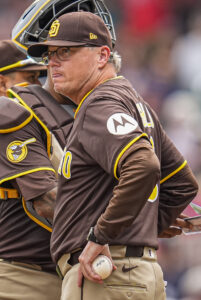
“The grind of the baseball season has taken a severe toll on me mentally, physically and emotionally,” Shildt wrote in a letter to the Union-Tribune. “While it has always been about serving others, it’s time I take care of myself and exit on my own terms.” He went on to thank the Padres organization, president of baseball operations A.J. Preller, and the players for his time with the team and wished them future success. In a statement released by the team, Preller said of Shildt, “His dedication and passion for the game of baseball will leave an impact on our organization, and we wish him the best in his next chapter.”
Shildt, 57, has led the Padres to a 183-141 (.565) record since the start of 2024. The club made the postseason in both of those years, reaching the National League Division Series in 2024 and the Wild Card Series this year. In that time, the team has gotten strong performances out of Fernando Tatis Jr., Manny Machado, and Jake Cronenworth among others, while also seeing the emergence of Jackson Merrill. The club is tied for seventh-best in the league with a 107 wRC+ in that time. Pitching-wise, the team ranks fifth in the majors with a 3.75 ERA and seventh with a 15.7% K-BB rate since the start of 2024. That success includes strong performances from starters Dylan Cease, Michael King, and Nick Pivetta, along with relievers Adrian Morejon and Robert Suarez. If not for the perennially excellent Dodgers, the Padres may have had a shot at first place in the NL West in those two years. Even then, it is hard to consider Shildt’s tenure with San Diego as anything other than a success.
Prior to managing the Padres, Shildt held various roles in the Cardinals organization, acting as quality control coach and third base coach in 2017 and bench coach in 2018. He was named the interim manager upon the firing of Mike Matheny in July 2018 and became the permanent manager in August of that year. He held that post through the 2021 season before departing the organization due to what were described at the time as “philosophical differences.” Shildt was hired by San Diego in a player development role in January 2022 and became the manager in November 2023 following Bob Melvin’s departure for the Giants. In all, he has posted a 435-340 (.561) record in parts of six seasons as a big-league manager and has twice finished in the top two for the NL Manager of the Year Award, winning it in 2019 with the Cardinals and finishing as the runner-up last year with the Padres.
Per Bob Nightengale of USA Today, Shildt is not necessarily retiring from baseball altogether. Rather, he is simply not looking to continue managing in the immediate future. When asked about the possibility, Shildt said, “Not at the moment. I need a break and take care of myself.” That’s not a definitive declaration that he’ll return to the dugout at some point, but Shildt left the door open for potential future opportunities. A return under those conditions would hardly be unprecedented; we’ve recently seen both Bruce Bochy and Terry Francona return to big league dugouts at older ages than Shildt.
With the Padres now looking for a new skipper, a staggering 10 out of 30 teams will enter 2026 with a different manager than the one with which they opened the 2025 season. President of baseball operations A.J. Preller thanked Shildt for his “significant contributions to the Padres and the San Diego community over the last four years” in a press release this morning and added that the search for a new manager will begin immediately.
Tigers Extended Manager A.J. Hinch Earlier This Season
The Tigers and manager AJ Hinch quietly agreed to a long-term contract extension during the 2025 season, president of baseball operations Scott Harris announced today at his end-of-season press conference (video link). Harris and Hinch did not specify the length of the contract, but Hinch ostensibly is now signed through at least 2027. Harris effused praise for Hinch, calling him one of the best managers in the sport and saying he hopes to continue working with him “as long as I can possibly work with him.”
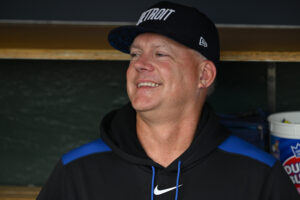
Hinch, 51, just wrapped up his fifth season as the manager in Detroit. This is already the second time the organization has “proactively” extended him — as Harris phrased it — before the conclusion of his existing contract.
The Tigers have reached the postseason and won a Wild Card series before falling in the ALDS in each of the past two seasons. Hinch’s club has gone 394-416 since he was hired following the 2020 season, though the Tigers spent the first three years of his managerial tenure wrapping up a large-scale rebuilding effort, so it’s hard to ding him for a sub-.500 record. Hinch has spent parts of 12 seasons as a major league manager in Detroit, Houston and Arizona.
With regard to the team’s coaching staff, the Harris/Hinch duo did not specify whether changes are on the horizon. Hinch voiced pride in his staff but noted that there will be an assessment period at all levels within the organization in the days ahead as leadership looks ahead to the 2026 season.
Of course, even if Harris and Hinch fully intend to bring back the same staff, there’s no guarantee that’ll happen. An incredible eight teams are on the hunt for a new manager right now, and it’s common for clubs seeking new skippers to look to the coaching staffs of contending clubs. Even if no Tigers coach is plucked away for a new managerial gig elsewhere, new managers with other teams will also look to contenders’ coaching staffs to fill out their own. If another team is interested in a Tigers assistant pitching coach or assistant hitting coach to take a lead role in their organization, for instance, that could lead to some turnover.
While some changes further down the ladder can’t be ruled out, however, the leaders in the baseball operations department and in the dugout are squarely returning, providing continuity as the Tigers look to capitalize on ace Tarik Skubal‘s final season of club control prior to his entrance into the free-agent market next offseason.
There was never any real thought that Hinch’s job would be in jeopardy, even after his team’s collapse in the season’s final few months. The Tigers floundered down the stretch and ultimately ceded the division crown to the Guardians despite holding a 9.5 game lead in the AL Central as deep into the season as Sept. 10. They rallied to topple Cleveland in the Wild Card round, however, before falling in a 15-inning ALDS Game 5 nailbiter against the AL West champion Mariners.
Fans of any of the incredible eight (!!) teams seeking a new skipper might have hoped that Hinch would potentially be available, but all indications since his hiring in Detroit are that he’s firmly entrenched himself as a pillar of the organization. Harris’ comments today reflect that, and Hinch himself spoke of how much he’s embraced the Tigers organization, the city of Detroit and the state of Michigan. Said Hinch:
“I’m so happy being in Detroit. I’m so proud to be the manager here. I love working for [Harris]. And this is the second time that I was approached and was asked for more — and it was an immediate ‘yes’ for me. When you have an environment that both pushes you and satisfied you, you want to be in it. I was honored. I was thrilled. It was one conversation with my wife, and I went back to Scott with an immediate ‘yes,’ and off we went.
…I can’t tell you how proud I am to be the manager of the Tigers. It’s a rewarding place to be. I bought a home here. We live here the majority of the year and we continue to be thrilled to become more and more Michiganders as a family.”
Munetaka Murakami To Be Posted This Offseason
Japanese slugger Munetaka Murakami is going to be posted by the Yakult Swallows of Nippon Professional Baseball, reports Mark Feinsand of MLB.com. It has long been expected that this would be the case, as it was reported three years ago that the plan was for Murakami to make the MLB move after 2025, but this report confirms that Murakami will be a key free agent to watch this winter.
The timing of the posting is not a coincidence. Under major league baseball’s international free agency rules, a player is considered an “amateur” if he is under the age of 25. These “amateur” players are subject to the international bonus pool system, wherein teams are hard-capped by annual budgets of roughly $4MM to $9MM. This was the case when Roki Sasaki was posted prior to his age-23 season. He eventually signed with the Dodgers and received a $6.5MM signing bonus, far less than he would have received with more open bidding. He is also treated like a minor leaguer, in that he will be making around the league minimum until he qualifies for arbitration and will be under club control until he accrues six years of big league service time.
Murakami won’t be in the same situation as Sasaki. He turned 25 in February will therefore be considered a professional under the current rules. Once he is officially posted, he will be free to negotiate with all 30 clubs for a period of 45 days and will have no restrictions on the kinds of offers he can receive. This situation is more analogous to that of Yoshinobu Yamamoto, who also signed with the Dodgers. His 12-year, $325MM deal was in a far different stratosphere compared to Sasaki.
Sasaki was eager enough to come to Major League Baseball that he came young, despite the clearly lesser earning power with that path. Murakami has understandably waited until after his 25th birthday and should be in line for a nice payday.
What remains to be seen is exactly how strong his market will be. In his NPB career, he has shown massive power potential but also real strikeout concerns. He has generally been good for 30 to 40 homers per year, though he had a massive 56-homer season in 2022. This year, he missed a large chunk of the season due to an oblique injury and only got into 56 games, but he managed to launch 22 balls over the fence in that small sample.
He was also punched out 64 times in 224 plate appearances this year, a rate of 28.6%. He had that down to 20.6% during his amazing 2022 season but he’s been above 28% for three straight years now. Overall, he has hit .270/.394/.557 in his NPB career. Since MLB pitching features greater velocity and generally higher quality than NPB pitching, it’s possible his strikeout rate would increase with the move. For reference, the MLB average was 22.2% this year and there were only nine qualified hitters above 28%.
Murakami has primarily been a third baseman during his time with the Swallows. He has also dabbled at first base and even got a brief look in left field this year. Scouting reports have generally pegged him as a middling fielder who will likely end up at first base in the long run.
That will put more pressure on his bat but some clubs may be more comfortable with him playing third base for a few years. Teams will also have varying opinions about how he will be able to adapt to MLB pitching.
For players coming over from Japan, there have been all sorts of different results. As mentioned, Yamamoto had so much strong interest that he was able to secure a 12-year pact with opt-outs. Shota Imanaga got a creative four-year guarantee with a multi-year club option and player option structure after two seasons. Seiya Suzuki and Masataka Yoshida got straight five-year deals worth $85MM and $90MM respectively. Both of those hitters had better NPB batting averages than Murakami but without the same power ceiling.
Since the Dodgers have landed many Japanese stars, many fans expect that to be the outcome here. However, it’s not a perfect roster fit. The Dodgers have Freddie Freeman at first base and Shohei Ohtani in the designated hitter spot. They have an affordable $10MM club option to keep Max Muncy around as their third baseman next year. Signing Murakami can’t be totally ruled out but it may require them to move on from Muncy, who has been a cornerstone of the club for years and is still putting up good numbers, or perhaps try Murakami as an outfielder. Even if Muncy’s option is picked up, he’s slated for free agency after 2026, with Freeman only signed through 2027, so the long-term fit is better than in the short term.
The Red Sox would be a cleaner fit now, since Alex Bregman is likely to opt out of his deal and the club has questions at first base. The Mets have first base open with Pete Alonso set to opt out and they don’t have a clear answer at third base either. The Yankees could put him at first base, with Paul Goldschmidt becoming a free agent and Ben Rice capable of catching. The Cubs have Matt Shaw at third but almost signed Bregman last winter, so perhaps they are still willing to go after an external option there. The Tigers currently have Zach McKinstry at third but he’s capable of playing elsewhere. The Angels don’t have a long-term third base solution due to the ongoing injuries of Anthony Rendon. The Mariners are about to lose Eugenio Suárez to free agency. The Reds don’t have a definite answer at first base.
Over time, his market will become more clear. Whichever club signs him will also owe a posting fee to the Swallows. The posting fee is calculated as 20% of the contract’s first $25MM, 17.5% of the next $25MM, and 15% of spending above $50MM.
Photo courtesy of Sam Navarro, Imagn Images
Cody Bellinger To Opt Out Of Contract With Yankees
Cody Bellinger will decline his $25MM player option and become a free agent, reports Jorge Castillo of ESPN. That was never much in doubt, as the outfielder will hit the open market after one strong season with the Yankees. He’ll collect a $5MM buyout, half of which will be paid by the Cubs.
The Yanks had been tied to Bellinger in free agency and trade rumors for years. That finally came to fruition last offseason with what amounted to a salary dump trade with Chicago. Bellinger was coming off a relative down ’24 season (.266/.325/.426) and passed on his first opt-out chance in his three-year deal. The Cubs pulled off the Kyle Tucker trade to add a needed impact bat in the middle of the order. That left them without an outfield spot for Bellinger, so they sent him to the Yankees for essentially no return.
New York absorbed $47.5MM of the $52.5MM remaining on Bellinger’s contract. The Cubs paid $2.5MM of his $27.5MM salary this season and are responsible for the other $2.5MM on the buyout. The Yankees wound up paying $27.5MM for one year — $25MM in salary and the remaining half of the buyout.
That proved a worthwhile investment even if the team had a disappointing exit in this week’s Division Series. Bellinger played about as well as could be expected. He hit .272/.334/.480 across 656 plate appearances. Bellinger hit 29 homers, his best single-season total since he connected on 47 longballs during his 2019 MVP season. He swiped 13 bases while cutting his strikeout rate to a career-low 13.7% clip.
Bellinger’s left-handed swing seemed tailor made for Yankee Stadium. He hit 18 homers with a .302/.365/.544 batting line at home. His road numbers were essentially league average, as he slashed .241/.301/.414 outside the Bronx. That could give some teams pause about how the bat will play if he signs elsewhere. Bellinger didn’t find the robust market he wanted when he was a free agent during the 2023-24 offseason, nor was there significant trade interest when the Cubs shopped him last winter. If there were, the Yankees would’ve needed to give up more than journeyman righty Cody Poteet to acquire him.
That’s largely because of Bellinger’s pedestrian batted ball metrics. He has been in the bottom quarter of the league in average exit velocity in each of the past three seasons. He doesn’t have a ton of bat speed and certainly doesn’t hit the ball as hard as he did early in his career — before he suffered a shoulder injury that tanked his numbers between 2021-22. Bellinger has compensated for the drop in bat speed by cutting his strikeouts every season, and he carries a .281/.338/.477 line in nearly 1800 plate appearances over the past three years.
Bellinger returns to the market a few months after his 30th birthday. He’s young enough to seek a five- or six-year deal. Bellinger is a better defender and arguably superior all-around hitter than Anthony Santander, who signed for five years with a net present value around $69MM last winter. There’s little reason Bellinger shouldn’t beat that contract fairly handily. It wouldn’t at all be surprising if his camp starts out with an asking price in the $100-150MM range.
The Cubs issued Bellinger a qualifying offer after the 2023 season. That makes him ineligible to receive a QO for the rest of his career. The Yankees would not receive any kind of compensation if he signs elsewhere, nor would another team forfeit a pick. New York can and probably will make a qualifying offer, which would land around $22MM, to Trent Grisham. They’re also set to have Luke Weaver, Devin Williams, Paul Goldschmidt and a handful of role players hit the open market. Williams entered the season as a qualifying offer candidate, but the Yankees are probably content to let him move on after an uneven season in pinstripes.
Angels, Albert Pujols Discussing Managerial Deal
6:22pm: Bob Nightengale of USA Today writes that the Angels have not yet made Pujols an official offer, though he confirms that the interview went well.
6:00pm: It seems the Angels have made up their mind about their next manager, though he still has to agree. According to a report from Sam Blum and Katie Woo of The Athletic, the job is going to go to Albert Pujols as long as he wants it. Per the report, Pujols met with general manager Perry Minasian last night and the meeting went well. Discussions on a deal are in the works but there’s not yet an agreement in place.
It was reported just over a week ago that Pujols would interview for the job and would be a frontrunner. That was just a few days after it was reported that neither Ron Washington nor Ray Montgomery would be back in the job. Washington opened the 2025 season as the skipper but was away for most of the year due to quadruple bypass surgery, with Montgomery covering for him on an interim basis. Torii Hunter has also been reported as a candidate but today’s reporting indicates that Hunter would only be a real consideration if things fall through with Pujols.
Per Blum and Woo, the Angels hope to make an official announcement before the World Series, though there are still some contractual things to work out. The report suggests that Pujols’s personal services contract could be a factor.
The ten-year, $240MM contract he signed with the Angels in 2011 included a ten-year, $10MM personal services contract for after his retirement as a player. He finished his playing career after the 2022 season. He had been released by the Angels and then spent some time with the Dodgers and Cardinals. In February of 2023, he rejoined the Angels as a special assistant to honor that personal services pact. Since he’s only three seasons into that deal, there are seven years left. It’s not clear how the existing contract would impact whatever is being negotiated for him to take the skipper job.
Pujols has previously expressed an interest in becoming a manager but has no experience in affiliated ball, either as a manager or as a coach. He managed Leones del Escogido, a Dominican winter ball team, last offseason. The Leones won the Serie Final over Tigres del Licey in seven games. Pujols is slated to manage the Dominican Republic national team in the upcoming World Baseball Classic but would presumably have to bow out of that gig if he signs with the Angels.
Assuming the sides are able to cross the T’s and dot the I’s, then Pujols will be in the Angels dugout yet again. It feels like a fait accompli at this point, as Blum and Woo report that the coaching staff negotiations are also already in motion. The report notes that former big leaguer Ramón Martínez, brother of Pedro Martínez, is Pujols’s top choice for pitching coach. Barry Enright has been the Halos’ pitching coach for the past two years but it’s fairly common for new managers to make some coaching changes.
The Halos haven’t had a winning season since 2015. Mike Scioscia had a long run as the club’s skipper, from 2000 to 2018. Since then, as the club has struggled, there has been a lot more turnover. Brad Ausmus, Joe Maddon, Phil Nevin, Washington and Montgomery have been at the helm in recent years. It seems Pujols will likely be the next guy to get a chance to turn the ship around.
Photo courtesy of Kevin Jairaj, Imagn Images
Projected Arbitration Salaries For 2026
Matt Swartz has created a model to project salaries for arbitration eligible players, which we’ve been publishing at MLB Trade Rumors for 15 years.
In the baseball industry, teams and agents determine arbitration salaries by identifying comparable players. To project the entire arbitration class in this way would take a massive amount of time and effort. So, Matt has developed an algorithm to project arbitration salaries that looks at the player’s playing time, position, role, and performance statistics while accounting for inflation. The performance of comparable players matters, but our system is not directly selecting individual comps for each individual player.
As a disclaimer, it should be emphasized that our projections are not to be used as a scorecard for the agent and team on an individual player level. A player doing better or worse than our projection isn’t indicative of anything. Our arbitration projections are created as a tool for our readers to get a general idea of a team’s payroll situation.
While the service time figures included are official, there is not yet an established Super Two cutoff, which delineates which players with between two and three years of service qualify for early arbitration. That could lead to a few late entrants being added to the list. It’s also worth noting that contracts signed prior to the non-tender deadline aren’t generally considered to be normal arbitration comparables; contracts signed prior to that deadline can be skewed by light offers that are presented to borderline non-tender candidates in take-it-or-leave-it fashion (with “leave it,” in such instances, being a non-tender). That’s not universal to all pre-tender deals but is frequently applicable.
One other note: it’s increasingly common for teams to negotiate one-year deals with club options or mutual options covering an additional arbitration season. We’ve noted all of the players who have an option for the 2025 season under the terms of a prior agreement. If the team buys out that option, the player does not become a free agent. He simply is paid whatever buyout (if any) was agreed upon under the terms of the prior agreement and heads back through the arbitration process again this winter.
If you find MLBTR’s arbitration projections useful, please consider supporting us with a subscription. Trade Rumors Front Office subscribers received early access to these arbitration projections, and the subscription also includes the best research tools you can get without actually working for an MLB team: our contract tracker, our agency database and our GM tracker.
The projections:
Angels (10)
- Taylor Ward (5.164): $13.7MM
- Brock Burke (5.045): $2MM
- Connor Brogdon (4.090): $1MM
- Jo Adell (4.085): $5.5MM
- Carson Fulmer (4.018): $1.2MM
- Reid Detmers (3.159): $2.6MM
- Jose Soriano (3.121): $3.2MM
- Carter Kieboom (3.009): $800K
- Logan O’Hoppe (3.008): $2.9MM
- Zach Neto (2.170): $4.1MM
Astros (16)
- Mauricio Dubon (5.162): $5.8MM
- Steven Okert (5.089): $2MM
- Luis Garcia (5.083): $2.2MM
- Ramon Urias (5.025): $4.4MM
- Bryan Abreu (5.022): $5.9MM
- Enyel De Los Santos (5.015): $2.1MM
- Chas McCormick (4.161): $3.4MM
- Isaac Paredes (4.160): $9.3MM
- Jesus Sanchez (4.118): $6.5MM
- Jake Meyers (4.044): $3.5MM
- Jeremy Pena (4.000): $7.9MM
- Hunter Brown (3.035): $5.7MM
- Yainer Diaz (3.035): $4.5MM
- Hayden Wesneski (2.170): $1.5MM
- Bennett Sousa (2.156): $1.1MM
- Taylor Trammell (2.144): $900K
Athletics (5)
- Austin Wynns (5.017): $1.8MM
- Shea Langeliers (3.051): $5.1MM
- JJ Bleday (3.029): $2.2MM
- Ken Waldichuk (2.150): $900K
- Luis Medina (2.149): $900K
Blue Jays (7)
- Daulton Varsho (5.128): $9.7MM
- Eric Lauer (5.091): $4.4MM
- Dillon Tate (5.018): $1.7MM
- Nick Sandlin (4.157): $2MM
- Ernie Clement (3.168): $4.3MM
- Ryan Burr (3.109): $800K
- Tyler Heineman (3.066): $1MM
Braves (9)
- Jake Fraley (5.097): $3.6MM
- Joel Payamps (4.117): $3.4MM
- Jose Suarez (4.064): $1.5MM
- Alek Manoah (4.063): $2.2MM
- Dylan Lee (3.150): $1.9MM
- Eli White (3.140): $1.2MM
- Vidal Brujan (3.014): $800K
- Joey Wentz (2.166): $1.1MM
- Nick Allen (2.164): $1.5MM
Brewers (7)
- Jake Bauers (5.084): $2MM
- Andrew Vaughn (4.142): $7.8MM
- William Contreras (4.112): $11.1MM (Brewers hold a $12MM club option with a $100K buyout)
- Nick Mears (4.022): $1.6MM
- Trevor Megill (4.002): $4.2MM
- Garrett Mitchell (3.040): $1MM
- Brice Turang (2.165): $4.4MM
Cardinals (9)
- Jorge Alcala (5.165): $2.1MM
- JoJo Romero (5.045): $4.4MM
- John King (4.148): $2.1MM
- Lars Nootbaar (4.076): $5.7MM
- Brendan Donovan (4.000): $5.4MM
- Andre Pallante (3.145): $3.4MM
- Nolan Gorman (3.114): $2.9MM
- Alec Burleson (3.029): $3.5MM
- Matthew Liberatore (2.144): $2.8MM
Cubs (4)
- Reese McGuire (5.110): $1.9MM
- Justin Steele (4.143): $6.55MM
- Eli Morgan (4.091): $1.1MM
- Javier Assad (3.027): $1.9MM
Diamondbacks (11)
- Ildemaro Vargas (5.129): $1.4MM
- A.J. Puk (5.124): $3.3MM
- Ryan Thompson (5.095): $3.9MM
- Kevin Ginkel (5.033): $3MM
- John Curtiss (4.078): $1.2MM
- Pavin Smith (4.015): $2.4MM
- Alek Thomas (3.103): $2.2MM
- Kyle Nelson (3.081): $1MM
- Jake McCarthy (3.074): $1.9MM
- Gabriel Moreno (3.061): $2.4MM
- Ryne Nelson (3.020): $3.3MM
Dodgers (9)
- Brusdar Graterol (5.167): $2.8MM
- Tony Gonsolin (5.152): $5.4MM
- Evan Phillips (5.136): $6.1MM
- Alex Vesia (5.078): $4.1MM (Dodgers hold a $3.65MM club option with a $50K buyout)
- Anthony Banda (4.135): $1.7MM
- Brock Stewart (4.093): $1.4MM
- Ben Rortvedt (3.135): $1.3MM
- Michael Grove (3.031): $800K
- Alex Call (2.161): $1.5MM
Giants (5)
- JT Brubaker (5.162): $2.1MM
- Andrew Knizner (5.090): $1.3MM
- Joey Lucchesi (5.047): $2MM
- Ryan Walker (2.136): $2.5MM
- Patrick Bailey (2.136): $2.2MM
Guardians (8)
- Kolby Allard (5.004): $1.9MM
- Sam Hentges (4.157): $1.3375MM
- Steven Kwan (4.000): $8.8MM
- Ben Lively (3.133): $2.7MM
- Nolan Jones (3.007): $2MM
- Will Brennan (2.155): $900K
- David Fry (2.154): $1.2MM
- Matt Festa (2.153): $1MM
Marlins (7)
- Anthony Bender (4.153): $2.3MM
- Braxton Garrett (3.168): $1.53MM
- Edward Cabrera (3.147): $3.7MM
- Ryan Weathers (3.066): $1.5MM
- Andrew Nardi (3.053): $800K
- Max Meyer (2.166): $1.3MM
- Calvin Faucher (2.156): $1.9MM
Mariners (10)
- Trent Thornton (5.148): $2.5MM
- Randy Arozarena (5.129): $18.2MM
- Logan Gilbert (4.144): $10MM
- Gabe Speier (4.000): $1.7MM
- George Kirby (3.151): $5.4MM
- Tayler Saucedo (3.146): $1.1MM
- Matt Brash (3.121): $1.8MM
- Luke Raley (3.106): $1.8MM
- Gregory Santos (3.055): $800K
- Bryce Miller (2.153): $2.4MM
- Jackson Kowar (2.139): $800K
Mets (9)
- Luis Torrens (5.105): $2.2MM
- Tyrone Taylor (5.093): $3.6MM
- David Peterson (5.089): $7.6MM
- Nick Madrigal (5.087): $1.35MM
- Tylor Megill (4.031): $2.6MM
- Max Kranick (3.011): $1MM
- Huascar Brazoban (2.170): $1.3MM
- Francisco Alvarez (2.164): $2.4MM
- Reed Garrett (2.143): $1.4MM
Nationals (9)
- Jorge Alfaro (5.160): $1MM
- Luis Garcia Jr. (4.142): $7MM
- Josiah Gray (4.075): $1.35MM
- Mason Thompson (4.022): $1MM
- MacKenzie Gore (4.000): $4.7MM
- Riley Adams (3.171): $1.5MM
- CJ Abrams (3.130): $5.6MM
- Jake Irvin (2.152): $3.3MM
- Cade Cavalli (2.141): $1.3MM
Orioles (14)
- Ryan Mountcastle (5.105): $7.8MM
- Keegan Akin (5.083): $3MM
- Dylan Carlson (5.067): $1.5MM
- Trevor Rogers (5.047): $6MM
- Tyler Wells (4.132): $2.7MM
- Jose Castillo (4.112): $1.7MM
- Dean Kremer (4.112): $5.1MM
- Adley Rutschman (4.000): $6.8MM
- Felix Bautista (4.000): $2.1MM
- Kyle Bradish (3.160): $2.8MM
- Yennier Cano (3.065): $1.8MM
- Gunnar Henderson (3.036): $6.6MM
- Alex Jackson (3.036): $1.8MM
- Albert Suarez (3.019): $900K
Padres (7)
- Adrian Morejon (5.140): $3.6MM
- Jason Adam (5.132): $6.8MM
- Gavin Sheets (4.076): $4.3MM
- JP Sears (3.065): $3.5MM
- Luis Campusano (3.003): $1MM
- Mason Miller (2.166): $3.4MM
- Freddy Fermin (2.165: $1.8MM
Phillies (9)
- Jesus Luzardo (5.165): $10.4MM
- Edmundo Sosa (5.140): $3.9MM
- Alec Bohm (5.106): $10.3MM
- Garrett Stubbs (4.148): $925K
- Brandon Marsh (4.078): $4.5MM
- Jhoan Duran (4.000): $7.6MM
- Bryson Stott (4.000): $5.8MM
- Tanner Banks (3.092): $1.2MM
- Rafael Marchan (3.006): $1MM
Pirates (9)
- Dennis Santana (5.126): $3.4MM
- Johan Oviedo (4.078): $2MM
- Joey Bart (4.020): $2.7MM
- Justin Lawrence (3.167): $1.2MM
- Yohan Ramirez (3.135): $1.2MM
- Colin Holderman (3.120): $1.7MM
- Oneil Cruz (3.110): $3.6MM
- Dauri Moreta (3.056): $800K
- Jack Suwinski (2.170): $1.7MM
Rangers (9)
- Jonah Heim (5.097): $6MM
- Adolis Garcia (5.095): $12.1MM
- Josh Sborz (5.055): $1.1MM
- Jacob Webb (5.046): $2MM
- Sam Haggerty (5.007): $1.4MM
- Josh Smith (3.129): $3MM
- Jake Burger (3.127): $3.5MM
- Ezequiel Duran (3.050): $1.4MM
- Josh Jung (3.023): $2.9MM
Rays (17)
- Shane McClanahan (4.158): $3.6MM
- Cole Sulser (4.096): $1.2MM
- Taylor Walls (4.092): $2MM (Rays hold a $2.45MM club option with a $50K buyout)
- Griffin Jax (4.091): $3.6MM
- Garrett Cleavinger (4.060): $2.1MM
- Shane Baz (3.158): $3.1MM
- Nick Fortes (3.149): $2.4MM
- Christopher Morel (3.117): $2.6MM
- Stuart Fairchild (3.114): $900K
- Josh Lowe (3.093): $2.9MM
- Bryan Baker (3.049): $1.5MM
- Ryan Pepiot (3.005): $3.7MM
- Alex Faedo (2.169): $800K
- Kevin Kelly (2.156): $1MM
- Richie Palacios (2.156): $1MM
- Edwin Uceta (2.150): $1.4MM
- Manuel Rodriguez (2.139): $1.2MM
Red Sox (9)
- Nathaniel Lowe (5.145): $13.5MM
- Tanner Houck (4.100): $3.95MM
- Jarren Duran (3.155): $8.4MM (Red Sox hold an $8MM club option with a $100K buyout)
- Kutter Crawford (3.136): $2.75MM
- Romy Gonzalez (3.083): $1.8MM
- Connor Wong (3.079): $1.6MM
- Triston Casas (3.032): $1.7MM
- Josh Winckowski: (3.003): $800K
- Brennan Bernardino (2.150): $1.1MM
Reds (14)
- Brady Singer (5.156): $11.9MM
- Santiago Espinal (5.149): $2.9MM
- Gavin Lux (5.114): $5MM
- Tyler Stephenson (5.056): $6.4MM
- Ian Gibaut (4.077): $1.5MM
- Sam Moll (4.023): $1.2MM
- Nick Lodolo (4.000): $4.3MM
- Graham Ashcraft (3.130): $1.4MM
- TJ Friedl (3.112): $4.9MM
- Tony Santillan (3.099): $2.4MM
- Spencer Steer (3.035): $4.5MM
- Will Benson (3.003): $1.7MM
- Matt McLain (2.140): $2.6MM
- Brandon Williamson (2.139): $800K
Rockies (7)
- Thairo Estrada (5.153): $3.8MM (Estrada’s contract contains a $7MM mutual option with a $750K buyout)
- Jimmy Herget (4.069): $1.5MM
- Mickey Moniak (4.027): $4.2MM
- Lucas Gilbreath (3.150): $900K
- Ryan Feltner (3.071): $2.3MM
- Tyler Freeman (3.046): $1.8MM
- Brenton Doyle (2.161): $3.2MM
Royals (16)
- Taylor Clarke (5.148): $1.9MM
- Kris Bubic (5.135): $6MM
- John Schreiber (5.027): $3.8MM
- Jonathan India (5.000): $7.4MM
- Kyle Wright (4.151): $1.8MM
- Kyle Isbel (4.043): $2.7MM
- Bailey Falter (3.138): $3.3MM
- Daniel Lynch IV (3.136): $1.3MM
- Sam Long (3.121): $950K
- Vinnie Pasquantino (3.101): $5.4MM
- Angel Zerpa (3.082): $1.2MM
- Michael Massey (3.068): $2MM
- MJ Melendez (3.016): $2.65MM
- Maikel Garcia (2.168): $4.8MM
- James McArthur (2.150): $800K
- Lucas Erceg (2.136): $1.9MM
Tigers (15)
- Tanner Rainey (5.167): $1.6MM
- Tarik Skubal (5.114): $17.8MM
- Casey Mize (5.111): $5.4MM
- Jake Rogers (5.040): $2.9MM
- Will Vest (4.100): $3.3MM
- Zach McKinstry (4.099): $3.5MM
- Matt Vierling (4.026): $3.1MM
- Jason Foley (3.150): $3.15MM
- Alex Lange (3.145): $900K
- Andy Ibanez (3.133): $1.8MM
- Riley Greene (3.110): $6.6MM
- Spencer Torkelson (3.076): $5.1MM
- Kerry Carpenter (3.057): $3.5MM
- Beau Brieske (3.056): $1.3MM
- Tyler Holton (3.047): $1.7MM
Twins (10)
- Genesis Cabrera (5.149): $1.4MM
- Ryan Jeffers (5.089): $6.6MM
- Justin Topa (5.044): $1.7MM (Twins hold a $2MM club option with a $225K buyout)
- Michael Tonkin (5.044): $1.4MM
- Bailey Ober (4.093): $4.6MM
- Joe Ryan (4.033): $5.8MM
- Trevor Larnach (4.014): $4.7MM
- Royce Lewis (3.142): $3MM
- Anthony Misiewicz (3.082): $1.1MM
- Cole Sands (3.017): $1.3MM
White Sox (3)
- Mike Tauchman (5.143): $3.4MM
- Steven Wilson (3.166): $1.5MM
- Derek Hill (3.040): $1MM
Yankees (14)
- Jazz Chisholm Jr. (5.075): $10.2MM
- David Bednar (5.073): $9MM
- Mark Leiter Jr. (5.031): $3MM
- Clarke Schmidt (4.148): $4.9MM
- Camilo Doval (4.071): $6.6MM
- Jake Cousins (3.091): $841K
- Ian Hamilton (3.081): $941K
- Luis Gil (3.073): $2.1MM
- Scott Effross (3.063): $800K
- Jake Bird (3.051): $1MM
- Oswaldo Cabrera (3.050): $1.2MM
- Fernando Cruz (3.035): $1.3MM
- Anthony Volpe (3.000): $3.9MM
- Jose Caballero (2.170): $1.9MM
Rangers Hire Skip Schumaker As Manager
The Rangers have officially named Skip Schumaker their new manager. The 2023 NL Manager of the Year signed a four-year contract to become the 21st full-time skipper in franchise history. Schumaker’s hiring comes just four days after the team announced that future Hall of Famer Bruce Bochy would not be back for a fourth season.
“We are thrilled to announce this promotion and have Skip leading this club in the dugout,” president of baseball operations Chris Young said in a press release. “Over his past year as a senior advisor to our baseball operations group, Skip has proven to be driven, passionate and thorough in everything he does. He has a winning spirit and energy, and we are fortunate that someone so highly regarded in the industry has agreed to become our manager.”
The team also released a brief statement from Schumaker himself. “I am honored and excited for this opportunity to manage the Rangers,” he said. “While I attained a good understanding of the organization through my front office role this past season, the conversations with Chris Young, (general manager) Ross Fenstermaker, and others this week have only intensified my interest in this opportunity. I can’t wait to begin the work for 2026.”
This move has been telegraphed for almost a year. As mentioned in the club’s announcement, Schumaker joined the Texas organization last November as a senior advisor. That came a few weeks after he stepped down as manager of the Marlins after two seasons. It immediately raised speculation that Schumaker would be the successor whenever the 70-year-old Bochy decided to go in a different direction.
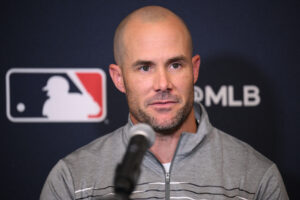
The rapidity of the hiring confirms this was the preferred outcome. Young told reporters this morning the club was not speaking with any candidates outside the organization (relayed by Evan Grant of The Dallas Morning News). It was only a matter of days for the team to finalize a contract that gets Schumaker back in the dugout.
A utility infielder during his playing career, Schumaker was a longtime role player for the Cardinals. He began his coaching days in San Diego, then returned to St. Louis as Oli Marmol’s bench coach for the 2022 season. Schumaker got his first managerial opportunity with the Marlins one year later. He signed a two-year deal with a club option for the ’25 campaign to lead what was viewed as a rebuilding Miami team.
The Fish outperformed expectations in 2023, winning 84 games and snagging a Wild Card spot. Unsatisfied with the team’s player development pipeline, owner Bruce Sherman made a change atop the front office at year’s end. Peter Bendix was brought in as president of baseball operations. General manager Kim Ng stepped down rather than work as the #2 executive after leading the front office for the preceding three seasons.
Bendix was unconvinced that Miami’s winning season really opened a contention window. They’d gotten to the playoffs despite being outscored by 57 runs. The Phillies comfortably swept them out of the first round. Ownership certainly wasn’t going to approve significant free agent spending. As Bendix geared up for the team’s latest rebuild, the Marlins agreed to void their option on Schumaker’s contract. He managed out a 100-loss season in 2024 and confirmed the long-apparent news that he would not be back for a third year in South Florida as soon as the season ended.
The sour finish has not detracted from Schumaker’s reputation as one of the sport’s top young managers. It doesn’t appear as though he seriously pursued a position last offseason. He was loosely tied to the White Sox vacancy that eventually went to Will Venable — ironically, the previous presumed successor to Bochy in Arlington — but decided to spend a season in the Texas front office while keeping his options open for 2026.
Schumaker steps into a dugout that might be in the midst of its own youth movement. The Rangers have disappointed in each of the past two seasons after winning the World Series during Bochy’s first year. The franchise has dealt with revenue losses related to the collapse of its local broadcast contract, leading to what is expected to be a reduced payroll. In announcing Bochy’s departure, Young told reporters the club was dealing with financial uncertainty and would place more emphasis on development of young players.
A roster shakeup was necessary anyhow. Their veteran lineup simply hasn’t been good enough over the past two seasons. It’d be a surprise if at least one or two of Adolis García, Jonah Heim, Josh Jung and Jake Burger weren’t traded or non-tendered. Texas still has four huge contracts on the books for Jacob deGrom, Corey Seager, Marcus Semien and Nathan Eovaldi. They’ll be saddled with Joc Pederson’s $18.5MM salary when he inevitably exercises his player option.
Trading any of deGrom, Eovaldi or Seager would signify a greater teardown than seems likely. They’d need to eat a lot of the remaining three years and $72MM on Semien’s contract to find any interest, and Pederson stands a better chance of being released than traded. There’s a good chance all five of those players are back, but there should be significant turnover among their group of arbitration-eligible hitters.
A 1-2 punch of deGrom and Eovaldi may alone be enough to keep them in the playoff hunt next year if both aces can stay healthy. They’ll need more foundational lineup pieces around Seager, Wyatt Langford, Evan Carter and eventually top prospect Sebastian Walcott if they’re to have consistent success throughout the Schumaker era.
There are now seven open or uncertain managerial positions around the game. The Giants and Twins fired Bob Melvin and Rocco Baldelli, respectively, at season’s end. The Angels announced they were not exercising Ron Washington’s club option for 2026, nor would they bring back interim skipper Ray Montgomery. Brian Snitker retired after leading the Braves for nine and a half seasons. The Nationals (Miguel Cairo), Rockies (Warren Schaeffer) and Orioles (Tony Mansolino) ended the year with interim managers after midseason firings. None of those teams have announced whether their interim candidates will get the position on a full-time basis.
Image courtesy of Orlando Ramirez, USA Today Sports.