
Poll: What’s Next For The Pirates?
As those who paid attention to the MLB offseason a year ago remember, Pirates center fielder Andrew McCutchen was among the most popular figures in the rumor mill. At the time, the Pittsburgh icon was coming off a career-worst season both offensively and defensively, which surely hindered the team in its efforts to garner suitable offers for him. Ultimately, the Pirates retained McCutchen and enjoyed a bounce-back year from him at the plate (.279/.363/.486 with 28 home runs in 650 PAs). While McCutchen struggled again in the grass, where he posted minus-14 Defensive Runs Saved and a minus-4.5 Ultimate Zone Rating, the onetime National League MVP nonetheless ranked a solid 17th among outfielders in fWAR (3.7).
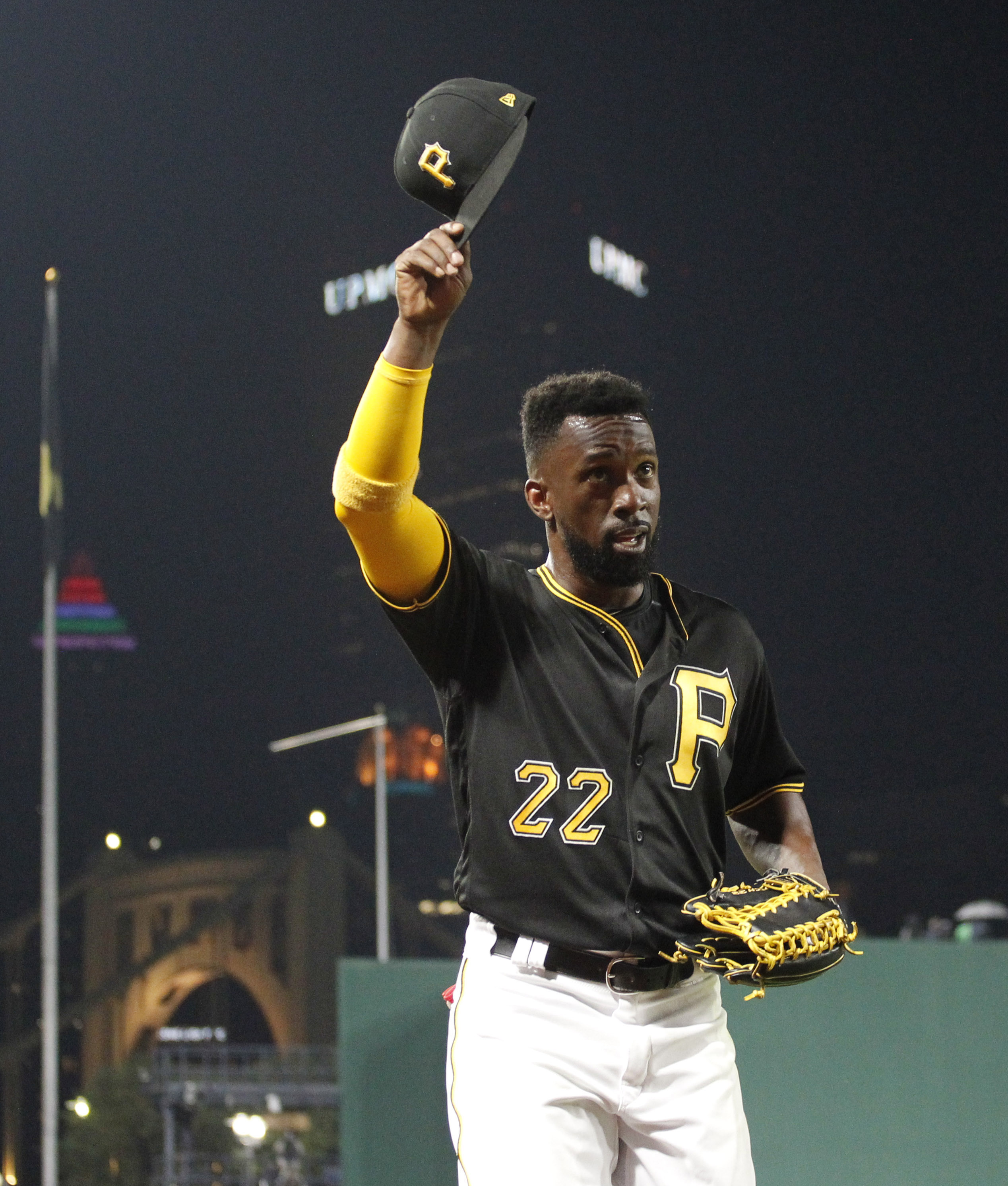
This winter, on the heels of a rebound year, rumors regarding McCutchen haven’t been nearly as abundant. The Giants are the only known team with interest in the 31-year-old, yet they don’t seem to view him as a priority. Still, although nothing looks imminent on the McCutchen front, it’s possible the five-time All-Star has played his last game with the Pirates – who drafted him 11th overall in 2005.
With McCutchen entering a contract year in 2018, in which he’ll make $14.75MM, general manager Neal Huntington acknowledged this month that the player’s time in Pittsburgh may be winding down. Trading McCutchen prior to the season wouldn’t seem to make much sense if the Pirates plan to compete next season and avoid a third straight non-playoff campaign, but a return to prominence may be a long shot.
With McCutchen in the fold, the Pirates are projected to start 2018 with a payroll of just under $104MM. That would represent a season-opening high for owner Bob Nutting, whose rosters haven’t begun any campaign above the $100MM mark since he took the helm of the franchise in 2007. The Pirates’ low-spending ways may make an offseason McCutchen trade all the more likely, though he’s not the only notable veteran they could jettison to help cut costs. Infielder Josh Harrison, who will make $10MM in his third-last year of team control next season, has drawn widespread trade interest and might find himself in the uniform of the Yankees, Mets, Blue Jays or another club by the springtime.
Unlike McCutchen and Harrison – two useful but not great assets – right-hander Gerrit Cole would bring back a significant return in a trade. Not only is the flamethrowing 27-year-old a bona fide No. 2/3 starter, but he’s due a relatively modest $7.5MM in 2018. Considering Cole’s a Scott Boras client, the likelihood of him eschewing free agency in favor of a long-term extension with the Pirates seems low. That could increase their urgency to trade Cole, who’s going into his penultimate year of team control.
No doubt cognizant of the Boras factor, Huntington was reportedly “motivated” to part with Cole earlier this month. It appeared then that Cole would join the Yankees, but talks between them and the Pirates subsequently lost momentum. Even if Pittsburgh and New York don’t eventually find common ground, though, there are plenty of other teams that would benefit from a Cole addition – and the Bucs have engaged with some of those clubs.
At times, the 2017 portion of the offseason was a slow-moving bore, but the payoff is that there will be copious trades and signings in the New Year. With enticing trade chips in McCutchen, Harrison and Cole, the Pirates may often find themselves at the center of the action leading up to April. If you were calling the shots for the club, how would you approach the next couple months?
(poll link for app users)
What should the Pirates do this winter?
-
Trade more than one 57% (8,927)
-
Keep all three and reassess during the season 22% (3,426)
-
Trade Cole 10% (1,581)
-
Trade McCutchen 8% (1,223)
-
Trade Harrison 3% (507)
Total votes: 15,664
Photo courtesy of USA Today Sports Images.
Poll: Who Will Sign Jake Arrieta?
Jake Arrieta is one of four major free agent starting pitchers who seems destined to sign in the new year. Arrieta’s agent, Scott Boras, has a long history of waiting out the market. Here’s a list of free agent contracts signed by Boras clients in the last decade in January, February, or March:
- Prince Fielder – $214MM (Jan 2012)
- Max Scherzer – $210MM (Jan 2015)
- Mark Teixeira – $180MM (Jan 2009)
- Chris Davis – $161MM (Jan 2016)
- Matt Holliday – $120MM (Jan 2010)
- Wei-Yin Chen – $80MM (Jan 2016)
- Adrian Beltre – $80MM (Jan 2011)
- J.D. Drew – $70MM (Feb 2007)
- Derek Lowe – $60MM (Jan 2009)
- Michael Bourn – $48MM (Feb 2013)
- Manny Ramirez – $45MM (Mar 2009)
- Oliver Perez – $36MM (Feb 2009)
- Rafael Soriano – $35MM (Jan 2011)
- Kyle Lohse – $33MM (Mar 2013)
- Denard Span – $31MM (Jan 2016)
Keep in mind, however, that not all of these contracts met expectations. We ranked Arrieta fourth on our list, with a prediction of four years, $100MM that I’m guessing Boras would have said was way low. I think Arrieta can still get a contract in that range. But from which team?
The Cubs seem more interested in Yu Darvish than in bringing Arrieta back, but it’s reasonable to keep them in the mix for Jake. Jon Heyman of FanRag Sports has linked the Nationals to Arrieta, and that’s certainly a team that was involved on many of the above-listed Boras free agents. A source speaking to Chelsea Janes of the Washington Post called the team’s interest in Arrieta “tepid.” Heyman has also named the Phillies, though Inquirer beat writer Matt Gelb doesn’t see that as likely either. The Astros, Blue Jays, Rockies, Rangers, Brewers, Twins, and Cardinals have been linked as well. Keep in mind that teams that might have shied away from huge November/December demands for Arrieta could re-enter the picture if the price gets more realistic in the new year. Another factor is draft pick compensation. For more info on that, check out my post about which draft picks each team would lose by signing a qualified free agent like Arrieta.
With that, I throw it out to you:
Which team will sign Jake Arrieta?
-
Cubs 15% (3,926)
-
The Field 14% (3,506)
-
Rangers 12% (3,158)
-
Brewers 11% (2,745)
-
Cardinals 10% (2,687)
-
Phillies 10% (2,613)
-
Nationals 9% (2,300)
-
Astros 6% (1,537)
-
Twins 5% (1,414)
-
Blue Jays 5% (1,269)
-
Rockies 2% (593)
Total votes: 25,748
Poll: “Pillow” Contracts
It’s nearly January, and the ten best players on this winter’s free agent market according to MLBTR haven’t been signed (Masahiro Tanaka opted in to the remaining three years on his contract with the Yankees, so he never reached free agency). With teams being incredibly patient this year, some in the industry have suggested that one or more of these players could be willing to sign one-year “pillow contracts” at high average annual values, if they can’t find a long-term deal close enough to their current asking prices.
The idea of a pillow contract isn’t altogether farfetched. It’s not uncommon for smaller name free agents to accept one year deals in order to reestablish value after an injury-plagued (or otherwise subpar) season. Though it’s a bit less common for prominent healthy players to do this, there’s some precedent. Yoenis Cespedes‘ three-year, $75MM deal with the Mets back during the 2015-2016 offseason was in some sense a pillow contract; the deal paid him $27.5MM over the first year, with an opt out the following offseason. It worked out well for Cespedes; he ultimately exercised the opt-out and agreed to a more lucrative four-year, $110MM pact (again with the Mets) the following winter.
Such contracts could also act as a failsafe should the top free agents find themselves unable to achieve their desired guarantees by the time February draws to a close. After all, one need not look any further than Stephen Drew and Kendrys Morales for a cautionary tale about players overestimating the market for their services; both players remained unsigned well into the 2014 season and ultimately lost out on significant money. Of course, it should be noted that their markets were significantly affected by the old qualifying offer system.
On the other hand, a pillow contract carries its own type of risk. Injuries, stark drop-offs in performance, and a number other factors could hurt a player’s earning potential when he reaches free agency again. What’s more, the free agent market next year boasts some incredibly high-end talent; the 2018-2019 crop will probably include the likes of Bryce Harper, Clayton Kershaw, Manny Machado and Josh Donaldson. Should any of this year’s free agents opt to settle for high-value one-year contract, they could end up struggling for attention in a crowded market next winter, with the added downside of being a year older.
Obviously, no player will agree to a pillow contract except as a last resort prior to spring training. If they can’t get the guarantees they’re seeking now, it’s far more likely that these players would accept a smaller (but still hefty) multi-year guarantee rather than take a one-year deal and risk losing out on tens of millions of dollars. But the agents of these players have a greater agenda, and if the best offers their clients are getting would set a poor precedent for future contracts, it’s conceivable that the agents could become proponents of pillow contracts for their clients.
There are clear pros and cons to these deals, but I’ll open the conversation up to our reader base at this point. What do you think? (Poll link for app users)
Will Any Of The Top 10 2017-2018 Free Agents Take A Pillow Contract?
-
Yes, more than one 58% (5,168)
-
No 23% (2,013)
-
Yes, but only one 20% (1,748)
Total votes: 8,929
Poll: Who Will Sign Eric Hosmer?
The current Major League Baseball offseason has been an unusual one for multiple reasons, including the lack of movement atop the free agent market. Nearly two months after free agency opened, most of the elite members of this winter’s class remain on the board. That includes longtime Royals first baseman Eric Hosmer, whose trip to the market has been especially odd. Surprisingly, there’s no indication any contenders are pursuing him with any gusto.
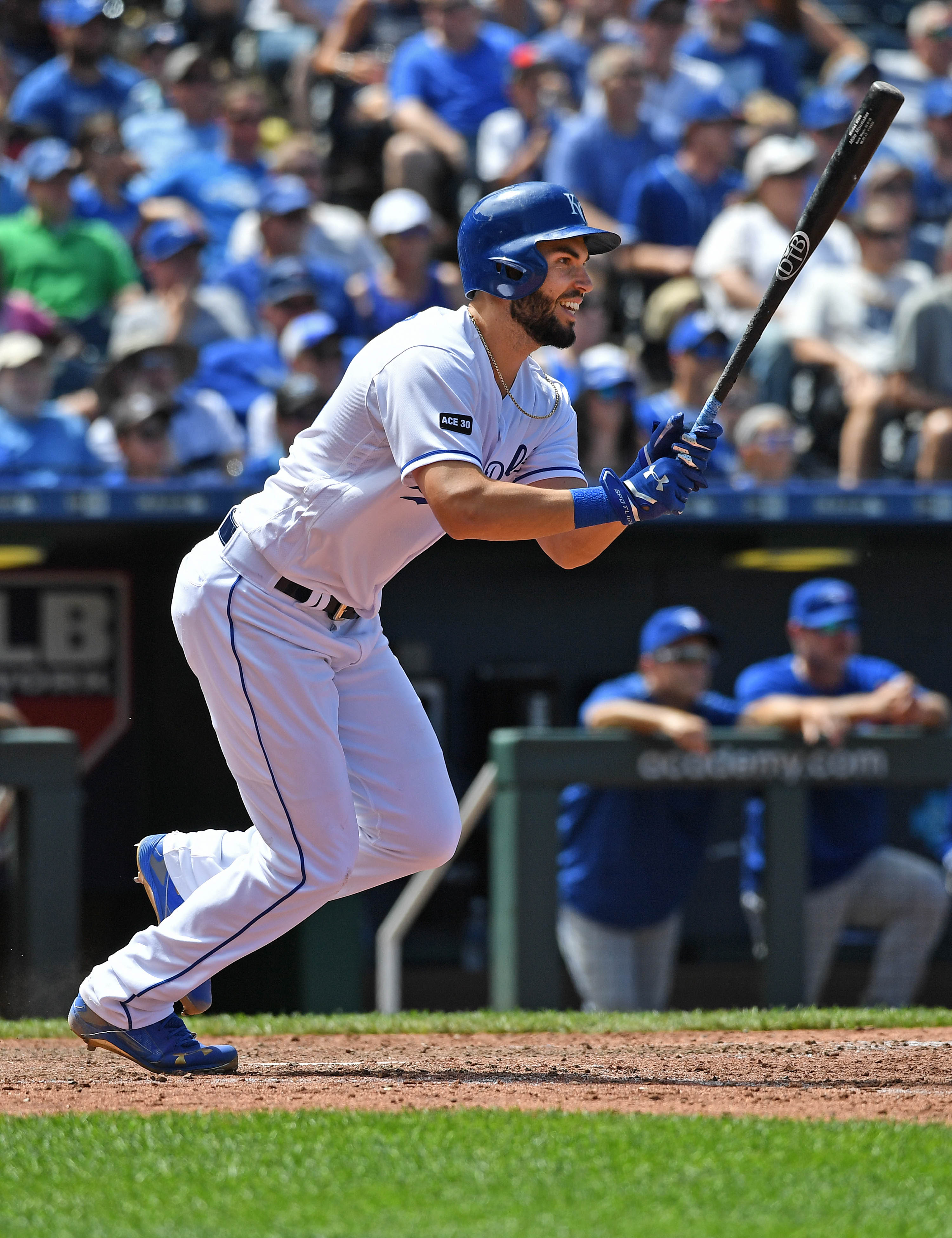
To this point, two clubs that don’t stand much chance to win in 2018 have shown the most interest in Hosmer. On one hand, it’s not exactly shocking that the Royals have tried to retain Hosmer, who’s one of the most popular players in franchise history and a key reason for their 2015 World Series title. It’s peculiar, though, that they’re trying to keep him while looking to cut payroll and rebuild.
Even with a career year from Hosmer in 2017 and important contributions from the likes of Mike Moustakas, Lorenzo Cain and Mike Minor – all of whom are now out of the organization – the Royals only won 80 games. So, odds are this isn’t a team that’s going to succeed in the near term even if it convinces the 28-year-old Hosmer to re-sign.
Similarly, the Padres aren’t going to pose a threat in 2018 – especially in a division with three of last season’s five NL playoff qualifiers – yet they’ve gone even harder after Hosmer than the Royals. The Padres met with Hosmer earlier this month, and a week later, they reportedly emerged as the favorites to sign him. But no agreement has come to fruition in the week and a half since then, perhaps owing to a difference of opinion within the San Diego organization.
Some Padres bigwigs would be on board with making Hosmer the first nine-figure player in franchise history with the hope that the well-regarded leader would serve as a culture-changing force; others have reservations about whether now is the right time for the Padres to splurge on a free agent. It’s easy to sympathize with the latter camp, given that the Padres are coming off their 11th straight non-playoff campaign and figure to need at least a couple more years to make a return to the postseason. By the time San Diego turns back into a contender (if it does anytime soon), Hosmer’s best years may be in the rearview mirror.
In addition to signing an enormous deal, an ideal scenario for Hosmer would likely include joining a team that’s in position to win now. But clear fits among contenders are difficult to find. The Cardinals have been linked to Hosmer, though they could continue with Matt Carpenter at first or roll with Jose Martinez and Luke Voit. With those options in the fold, they’ve been more focused on landing a high-profile third baseman than a first baseman in recent weeks. The Red Sox were a popular pick to reel in Hosmer earlier this offseason, but they seemingly took themselves out of the running this week with the surprise re-signing of fellow first baseman Mitch Moreland. And most other playoff hopefuls – including the Astros, Indians, Yankees, Twins, Angels, Mariners, Nationals, Cubs, Brewers, Dodgers, Diamondbacks, Rockies and Mets – either don’t need first base help or aren’t in position to spend big on it.
With highly skilled agent Scott Boras as his representative, one can’t rule out an unexpected team making a major play for Hosmer (Boras could probably talk the Heat Miser into buying a parka, after all). As of now, though, it seems Boras is facing long odds of finding a contender to take on Hosmer. Consequently, Hosmer may have to choose between staying in Kansas City or heading to San Diego.
(Poll link for app users)
Who will sign Eric Hosmer?
-
Other 40% (7,888)
-
Royals 34% (6,748)
-
Padres 26% (5,206)
Total votes: 19,842
Photo courtesy of USA Today Sports Images.
Poll: Should The Cubs Sign Yu Darvish?
It’s obvious now that the Cubs have more than a passing interest in free agent righty Yu Darvish, who the team’s top brass met with today in Texas. As Sahadev Sharma of The Athletic writes, it seems the growing likelihood of a match is the result more of market development than the pre-winter intentions of the Chicago organization.
The connection is real, then, but its consummation is hardly a fait accompli. It’s a good time to stop and take the temperature of the MLBTR readership on the subject with a poll.
It doesn’t take much explanation to establish the fit. Darvish is the top free agent starter, in MLBTR’s collective estimation. While the Cubs have added Tyler Chatwood to a staff that’s fronted by Kyle Hendricks, Jon Lester, and Jose Quintana, the club would like to add another high-quality arm to push Mike Montgomery into the bullpen (or out via trade). The club seems to have payroll space left to work with.
In one view, then, it’s simple: of course the Cubs should pursue Darvish. That said, if it’s circumstances driving the interest — say, Darvish’s interest levels and the still-lofty asking price of other top free agents like Jake Arrieta and Alex Cobb — then we have to bear in mind all the more that price will matter. It’s not as if the rest of the market will sit back and allow the Cubs to swoop in and make a deal; a few other teams, at least, have been cited as having ongoing interest.
So, rather than a simple yes/no question, I thought it’d be more interesting to see the circumstances under which folks believe a match would be sensible here for the Cubs. Darvish makes any team better, but perhaps you think he’s not as good as other options or that the team should prioritize other areas altogether. Or, maybe you think the expected contract price (something approaching or even exceeding Lester’s contract) is just too steep, but that Darvish would be a great add if he can be acquired for something below that rate. (Poll link for app users.)
Should the Cubs Sign Yu Darvish?
-
Sure, but only if he takes a discount from expectations. 42% (10,497)
-
Yes, even if it means paying top dollar. 28% (7,075)
-
No, the Cubs should chase a different top starter. 18% (4,565)
-
No, the Cubs should not use resources on a top starter. 11% (2,818)
Total votes: 24,955
How Good Are The Angels?
The Angels have employed the world’s best baseball player, center fielder Mike Trout, since 2011, yet the team has never come close to fully capitalizing on his presence. The Halos endured their third straight non-playoff season in 2017, during which a thumb injury helped limit Trout to a career-low 114 games, and finished below .500 (80-82) for the second year in a row. With Trout on their roster, the Angels have gone to the postseason just once – in 2014 – and the Royals swept them from the American League Division Series that year. So, through no real fault of his own, Trout has never even won a playoff game in the majors.
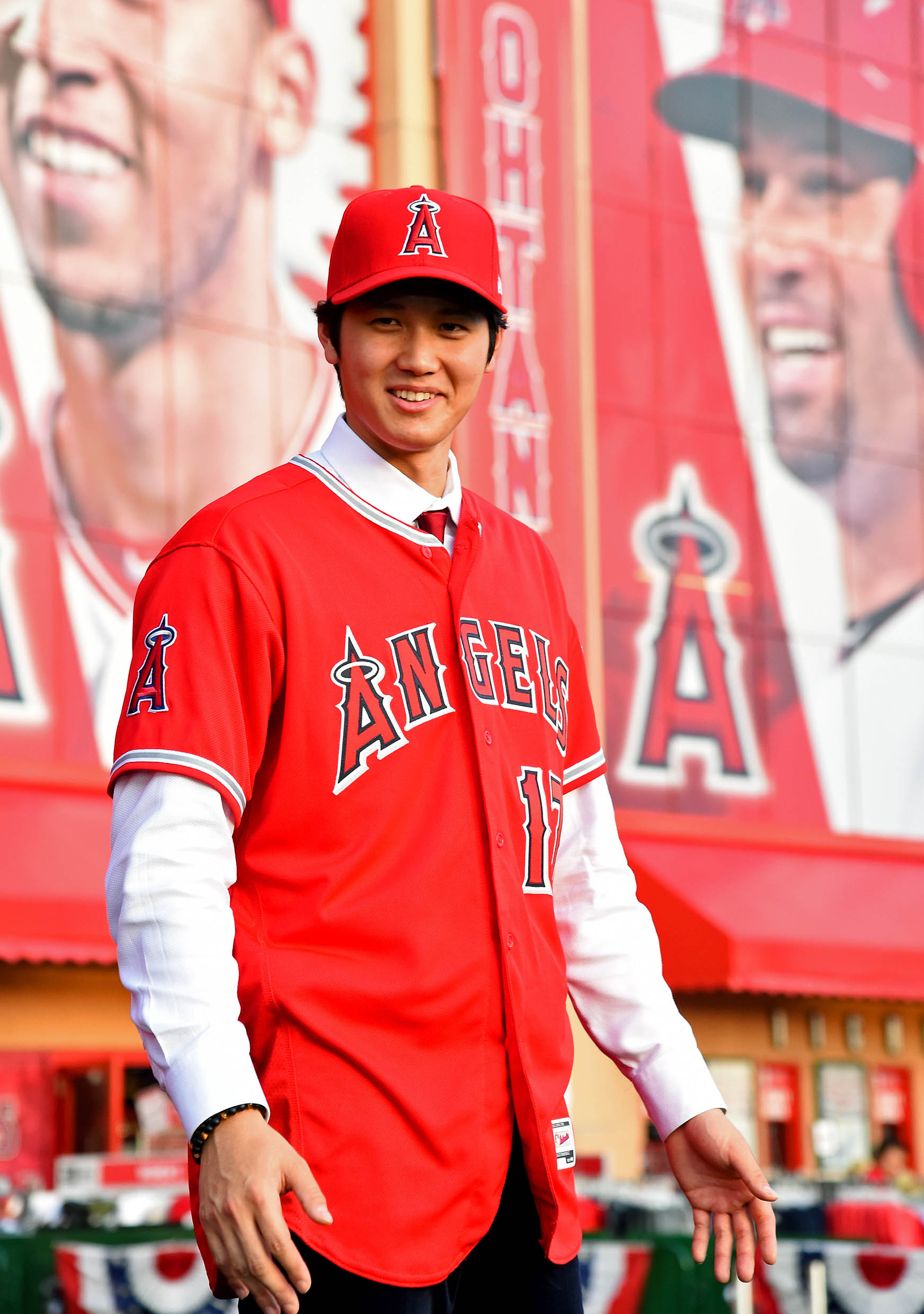
With Trout set to enter the third-last year of his contract in 2018, general manager Billy Eppler has spent this offseason making one impressive move after another to ensure the Angels finally give real support to the two-time AL MVP. Not only was Eppler able to reel in the offseason’s top free agent, ballyhooed Japanese phenom Shohei Ohtani, but he also kept big-hitting left fielder Justin Upton from leaving via the open market and improved the team’s infield substantially with the pickups of second baseman Ian Kinsler (acquired from the Tigers) and third baseman Zack Cozart (signed to a three-year, $38MM deal).
The Angels’ inability to find solutions at either the keystone or the hot corner helped lead to their downfall last season, when their second basemen finished with the majors’ third-worst fWAR (minus-0.3) and their third basemen posted the league’s 10th-worst mark (2.0). Kinsler and Cozart combined for 7.4 fWAR in 2017, meanwhile, and the latter was particularly strong during an unexpected offensive breakout (.297/.385/.548 in 507 plate appearances). Even if that proves to be a mirage and Cozart regresses to being the roughly league-average hitter he was from 2015-16, both that and the ex-Reds shortstop’s top-quality defense would still make him a welcome addition in Anaheim.
Now, with Trout, Upton, Kinsler, Cozart, shortstop Andrelton Simmons, catcher Martin Maldonado and right fielder Kole Calhoun, the Angels have an enviable core group of position players (though Calhoun’s the only lefty-swinger of the bunch). Of course, they may yet have another impressive bat in Ohtani, who thrived as a lefty slugger in Japan and will get an opportunity to factor in as a designated hitter with the Angels. Another benefit of Ohtani’s presence is that it should make it easier for the team to limit the at-bats of future Hall of Famer Albert Pujols, who seemed to finally hit the wall during his age-37 campaign in 2017.
While it’s anyone’s guess whether Ohtani’s offensive excellence will transfer from Japan to North America, he at least figures to be a front-line starting pitcher if healthy. That’s not a given, unfortunately, as the hard-throwing right-hander is currently dealing with a sprained UCL in his throwing elbow. Every team that courted Ohtani during his famous foray into free agency seemingly knew about the issue at the time, however, and there’s hope it won’t prove to be a major injury.
Barring a disastrous turn of events, Ohtani and fellow righty Garrett Richards – who barely pitched over the previous two years while contending with injuries of his own – should form an outstanding one-two punch. There are injury- and performance-related questions peppered throughout the rest of what could be a six-man starting staff, though, with no one from the quintet of Matt Shoemaker, Parker Bridwell, Tyler Skaggs, Andrew Heaney and Nick Tropeano inspiring a ton of confidence.
Beyond that, a bullpen that was an upper-echelon group last season lost arguably its premier reliever, workhorse Yusmeiro Petit, who joined the AL West rival Athletics in free agency. With apologies to up-and-down veteran Jim Johnson, whom the Angels acquired from the Braves last month, they haven’t done anything to adequately replace Petit. Consequently, their current relief corps consists of several question marks aside from Blake Parker, who was tremendous last season.
Eppler’s heavy lifting for the offseason is probably over, but he could still address certain areas – namely the pitching staff – in an effort to bolster the Angels’ playoff chances in 2018. At the same time, other AL GMs will surely make moves in the coming months that help shape the postseason race next year. But for now, the Angels join the division-rival/reigning world champion Astros, Indians, Yankees and Red Sox as the class of the AL, according to FanGraphs, which regards the new-look Halos as an 86-win team. Based on that projection, the Angels would finish three games ahead of sixth-place Toronto, earn the AL’s second wild-card spot and snap their three-year playoff drought. We’re still a few months from seeing these Angels play a meaningful game, but are you on the bandwagon right now?
(Poll link for App users)
Do you expect the Angels to make the playoffs in 2018?
-
Yes 66% (12,374)
-
No 34% (6,516)
Total votes: 18,890
Photo courtesy of USA Today Sports Images.
Poll: Who Will Sign Shohei Ohtani?
We have been covering Shohei Otani here at MLBTR since his first potential move to the majors — back in 2012, when he was a teenager. At that time, Ohtani decided to remain in Japan. Though an eventual posting always seemed likely, barriers arose along the way that made it seem he’d remain there a while longer, but the 23-year-old phenom is now well down the road of finally coming to North America to play at the game’s highest level. And now that he has narrowed his list of potential teams, we finally have an idea of where he might land.
With sit-down discussions just getting underway between Ohtani and his seven suitors, it seems an opportune time to get predictions from the MLBTR readership. It’s a fun exercise, nothing more, since at this point we still have no real idea what the decision will turn on.
Even if Ohtani himself has an inkling, he’s also surely waiting to see how he hits it off with each team. Of course, his list of possibilities does come with a few clues. He’s obviously inclined to play on the west coast, as all but two of the remaining teams are sited in states bordering the Pacific Ocean. Perhaps he’s not altogether committed to the idea of spending significant time as a DH (rather than an outfielder), as just three of the organizations are in the American League. Really, though, it’s pure guesswork.
Everybody has a pet theory or a gut intuition here. What’s yours? (Team order randomized; link for app users.)
Which Team Will Land Shohei Ohtani?
-
Mariners 33% (13,039)
-
Giants 14% (5,726)
-
Cubs 13% (5,050)
-
Dodgers 12% (4,767)
-
Angels 11% (4,188)
-
Padres 10% (4,104)
-
Rangers 7% (2,728)
Total votes: 39,602
Poll: Who Will Be The First Top-10 Free Agent To Sign?
There hasn’t been much action on the free agent front as we approach the end of November, and we’re still a couple of weeks away from the epicenter of offseason activity known as the Winter Meetings. Still, it isn’t uncommon for one big signing to trigger a plethora of other moves, so now it may just be a question of figuring out which major 2017-18 free agent will set off the offseason’s business by being the first to land a new contract.
Looking at MLBTR’s list of the top 50 free agents, of course, one very big name has already decided on his 2018 team — Masahiro Tanaka, the #5 free agent on the list, decided not to opt out of his deal with the Yankees. (Justin Upton also reached his new five-year agreement with the Angels before our list was published, otherwise he would’ve certainly had a high placement.) With Tanaka off the board, the top ten players on MLBTR’s list are, from 1-10: Yu Darvish, J.D. Martinez, Eric Hosmer, Jake Arrieta, Mike Moustakas, Lorenzo Cain, Wade Davis, Lance Lynn, Greg Holland, and Alex Cobb.
Beyond how each player personally chooses to approach the market, there are several other big-picture factors that will impact how quickly any of these free agents may find another contract. Shohei Ohtani‘s free agency and the Giancarlo Stanton trade talks could hold both the pitching and hitting markets at bay until either situation is resolved. Eight of the ten players (all except Darvish and Martinez) have draft pick compensation tied to their services via the qualifying offer. Martinez, Hosmer, Arrieta, Moustakas, and Holland are all represented by Scott Boras, who is known for waiting deep into the offseason for finding a suitable contract for his clients.
There’s still a lot of uncertainty in this offseason’s market…but hey, that just makes predicting all the more fun! Who do you think will be the first of the top 10 free agents to ink a new deal? (Poll link for App users)
Which Of These Free Agents Will Be The First To Sign?
-
Alex Cobb 20% (3,789)
-
J.D. Martinez 16% (3,000)
-
Lorenzo Cain 10% (2,009)
-
Jake Arrieta 9% (1,793)
-
Yu Darvish 9% (1,708)
-
Eric Hosmer 9% (1,706)
-
Wade Davis 8% (1,604)
-
Lance Lynn 8% (1,563)
-
Mike Moustakas 6% (1,140)
-
Greg Holland 5% (1,033)
Total votes: 19,345
Poll: Will The Rays Trade Chris Archer?
Even though Rays general manager Erik Neander suggested last week that the team plans to keep its top trade chip, Chris Archer, the right-hander still figures to frequent the rumor mill this offseason. On Saturday, for instance, Marc Topkin of the Tampa Bay Times reported that the Rays may well listen to offers on their priciest veterans, including Archer, this winter. The 29-year-old Archer certainly isn’t expensive – he’s controllable through 2021 at just $33.75MM – but removing his team-friendly contract would nonetheless help the Rays in their quest to cut payroll. Plus, with Boston and New York looking primed to serve as major American League East obstacles in the coming years, it could behoove the Rays to embark on a rebuild in the wake of four straight sub-.500 seasons and try to return to relevance down the road.
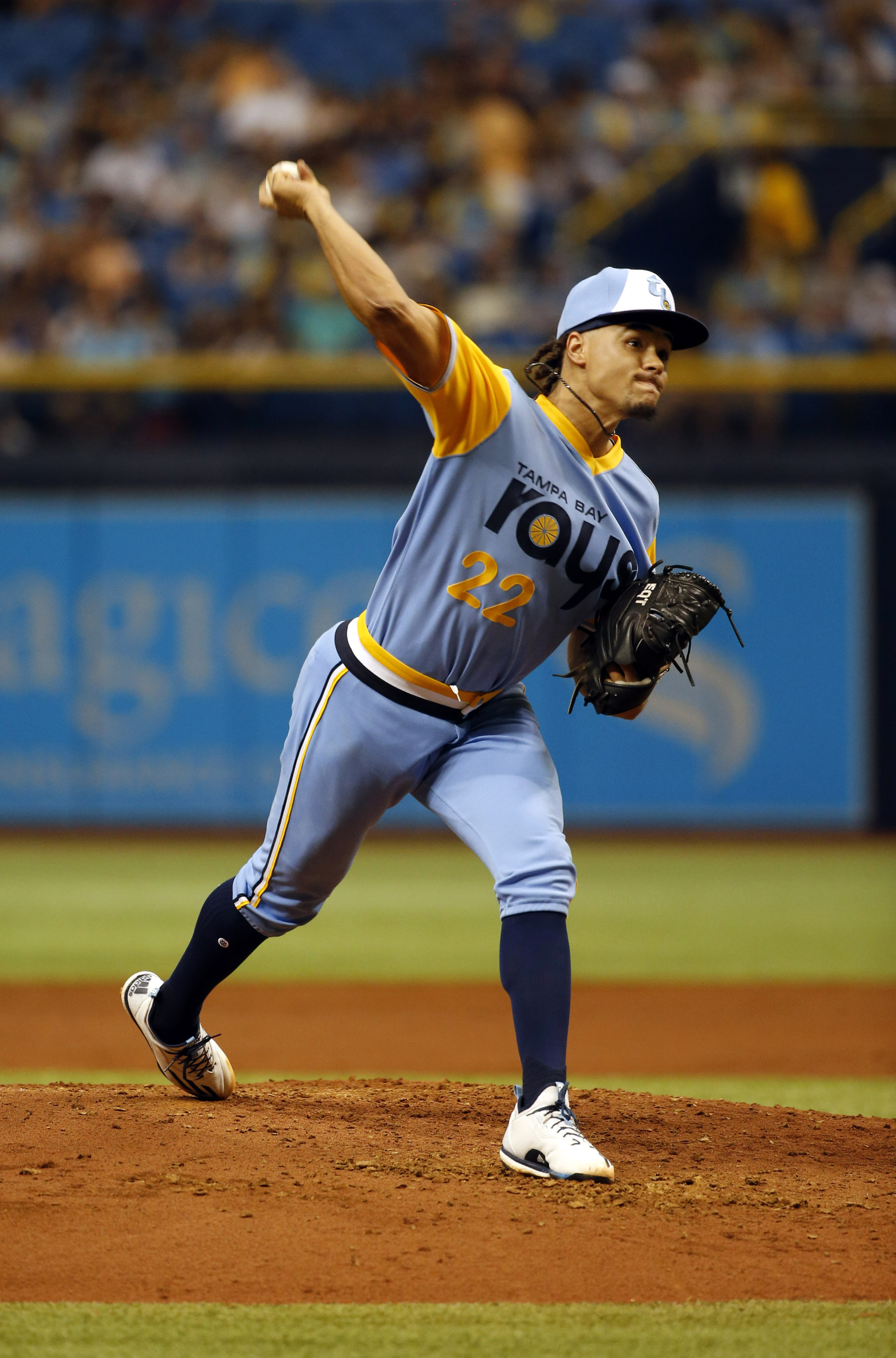
Trading Archer would be a near-term white flag from Tampa Bay, but it would go a long way toward helping the club further beef up its already deep farm system. The hard-throwing workhorse’s presence on the trade market would undoubtedly spark a bidding war, given both his ultra-affordable contract and front-line track record. Since debuting in 2012, Archer has pitched to a 3.63 ERA/3.46 FIP and notched 9.72 K/9 against 2.94 BB/9. He’s now coming off his third straight 200-inning season, one that saw him overshadow a merely decent ERA (4.07) with career-best marks in K/9 (11.15), BB/9 (2.69) and swinging-strike rate (13.4 percent).
Every team would love to add such an appealing starter, but some aren’t close enough to contention to justify seriously pursuing a trade for him, while others probably don’t have good enough farm systems to come out on top in an Archer sweepstakes. Of last season’s playoff teams, the Twins, Cubs (one of Archer’s ex-organizations) and Rockies stand out as clubs that would benefit the most from acquiring Archer, but it wouldn’t be a surprise to see any of the Astros, Dodgers (led by former Rays GM Andrew Friedman, who traded for Archer in Tampa Bay), Nationals or Yankees attempt to land him. Meanwhile, none of the Brewers, Cardinals, Braves or Phillies qualified for the postseason in 2017, but all of those clubs have above-average systems and are seemingly on the upswing. Those factors, not to mention issues in each of their rotations, would make Archer a reasonable target.
Any talk of an offseason Archer trade will go down as much ado about nothing if the Rays don’t opt for a major rebuild, but as Topkin suggested, it’s at least under consideration. Should the Rays take that extreme route, Archer would shake up a pitching market that includes a couple top-tier free agent starters (Yu Darvish and Jake Arrieta), with another potentially on the way in Japanese star Shohei Ohtani. For teams that can’t or don’t want to dish out nine-figure contracts to Darvish or Arrieta, and for those that miss out on the highly coveted Ohtani, Archer would make for an enticing alternative via trade.
(Poll link for App users)
Will the Rays trade Chris Archer this offseason?
-
No 51% (5,314)
-
Yes 49% (5,076)
Total votes: 10,390
Photo courtesy of USA Today Sports Images.
Poll: Which Of These Prospects Is Most Likely To Be Traded?
During the offseason, rumors about major league players dominate the headlines. Fans and analysts alike discuss potential landing spots for major league free agents and trade candidates. With so much of the focus on big name MLB players, the subject of which top prospects could change hands falls into the background.
The players below are some of the most valuable trade assets in the game who have not yet lost their rookie eligibility. MLB Pipeline considers each of them to be among the top 25 prospects in baseball. They all play for teams that are firmly in “win now mode”. Indeed, all five of them belong to teams that finished with a top four record in baseball last season. It’s safe to say that, were they to dangle their respective prospects as trade bait, each of those teams could fill nearly any need on their big league roster.
Victor Robles, OF (No. 2 Overall Prospect): Nationals
The Nationals signed Victor Robles out of the Dominican Republic at age 16, and he’s met little resistance throughout his development. The Nats promoted him to the majors for the first time in September of 2017; he even made the club’s NLDS roster. In his 24 regular season at-bats, Robles managed six hits, including three for extra bases. The Nationals are in need of another starting pitcher, and the 20-year-old outfielder could easily bring back an elite arm. Washington’s outfield picture for 2018 seems reasonably clear, with Adam Eaton, Michael Taylor and Bryce Harper all under contract and Brian Goodwin as a solid fourth outfielder option. However, Robles is practically major league-ready right now, so it might not make much sense to trade him when he could easily contribute this season. eIt’s especially important to note that Eaton, Taylor and Harper all dealt with injuries last season. With that in mind, the Nationals might prefer to deal their second-best prospect, outfielder Juan Soto, instead.
Kyle Tucker, OF (No. 7 Overall Prospect): Astros
Houston took Tucker out of H.B. Plant High School in Tampa, FL with the fifth pick in the 2015 draft. The young outfielder proceeded to rocket through the club’s minor-league system, reaching the Double-A level midway through 2017. Tucker’s hit tool is one of the best among minor-leaguers, but the Astros already have other left-handed outfield options at the major league level. Josh Reddick and Derek Fisher both bat primarily from the left side, while George Springer, Marwin Gonzalez and Jake Marisnick figure to be ahead of Tucker on the depth chart heading into 2018 as well. That’s not to say that Tucker isn’t more talented than those players, but it seems like a lot would have to happen for him to stumble into significant playing time next season. On the other hand, the Astros don’t have a clear hole on the major league roster outside of the bullpen, and Tucker is far too valuable to trade for a reliever. The organization has also reportedly been stingy about trading any of their top prospects lately, so perhaps it’s unlikely we’ll see him moved.
Francisco Mejia, C (No. 13 Overall Prospect): Indians
Mejia’s development has been a somewhat slow process; the Indians signed him out of the Dominican Republic all the way back in 2012. However, he’s vaulted up prospect lists after incredible success across the past two seasons, including a 50-game hit streak during the 2016 campaign. The best catching prospect in baseball is only 21 and has an elite hit tool from both sides of the plate. Cleveland decided to give him a bit of seasoning at the major league level this past September, which seems to imply that they think he could be close to MLB-ready. The Indians already have catchers Yan Gomes and Roberto Perez under contract for the foreseeable future, so Mejia could be a good candidate to be exchanged for help at first base if Carlos Santana signs elsewhere. But the Indians are also testing Mejia out at third base in the Arizona Fall League, a position he could more easily claim on the Tribe’s roster at some point in 2018.
Triston McKenzie, RHP (No. 20 Overall Prospect): Indians
After McKenzie struck out 157 batters in 91 innings during his senior year in high school, Cleveland selected the right-hander in Competitive Balance Round A of the 2015 draft. The lanky 20-year-old stands at 6’5″ and throws his fastball in the low 90s, though most scouts believe he could pick up even more velocity as he grows stronger. McKenzie struck out double-digit batters in six different games at the High-A level in 2017, including a 14-strikeout effort on May 9th. Overall, the Royal Palm Beach High School product pitched to a 3.45 ERA (and a 2.67 FIP) while punching out 11.71 batters per nine innings. With the Tribe’s window of contention seemingly at its peak, and McKenzie highly unlikely to reach the majors in 2018, the righty could potentially end up being an excellent trade chip. Even if the young righty were MLB-ready, the Indians already have a stacked rotation that will include Corey Kluber, Carlos Carrasco, Trevor Bauer and two of Danny Salazar, Josh Tomlin and Mike Clevinger. McKenzie could be dangled for help at first base (should Santana depart), or elite bullpen help such as Brad Hand or Felipe Rivero.
Alex Verdugo, OF (No. 23 Overall Prospect): Dodgers
The Dodgers took Verdugo in the second round of the 2014 draft, and the left-handed outfielder has done well at every level of the minors. His power isn’t prolific and his speed is average, but his hit tool is excellent. Verdugo is patient at the plate and is great at hitting to the opposite field. While fellow Dodgers prospect Walker Buehler is excluded from this list due to his proximity to the majors and a fairly clear opening in LA’s rotation, Verdugo could be more of a luxury than a vital asset. Chris Taylor and Yasiel Puig are set to man center field and right field, respectively, and it’s unclear whether the Dodgers are ready or willing to give up on Joc Pederson yet, especially following a strong postseason performance. Verdugo could potentially be used to land a strong second baseman. It’s not outside the realm of possibility that he could be used to acquire a more proven outfielder, either. Still, the Dodgers have four other top 100 prospects outside of Buehler and Verdugo. Even if they attempt to make a blockbuster trade during the offseason, they might prefer to move someone a bit further away from the majors.
What do you think? Which of these top 25 prospects is most likely to be with another organization by the time spring training rolls around? (Poll link for app users)
Which Of These Top Prospects Is Most Likely To Be Traded?
-
Alex Verdugo (Dodgers) 34% (4,669)
-
None of these prospects has any chance of being traded 25% (3,415)
-
Victor Robles (Nationals) 13% (1,724)
-
Kyle Tucker (Astros) 12% (1,659)
-
Triston McKenzie (Indians) 9% (1,281)
-
Francisco Mejia (Indians) 7% (1,023)
Total votes: 13,771