
NL Notes: Mets, Reyes, Padres, Schwarber
The Mets bringing back soon-to-be free agent shortstop Jose Reyes is a “long shot,” a source told Newsday’s David Lennon, who reports that the door isn’t closed on the possibility. As of now, the Mets are in wait-and-see mode with the 33-year-old Reyes, whom the Rockies designated for assignment earlier this week on the heels of a subpar 2015 showing and, more importantly, a 52-game domestic violence suspension. Reyes would bring much-needed speed to a Mets team with the fewest stolen bases in the National League (13), notes Lennon, who adds that he’d come at a cheap price and, unlike other options, wouldn’t require the club to trade prospects. If the Mets do reunite with Reyes, they’d likely put him at second base and move Neil Walker to third to replace the injured David Wright, per Lennon. During his Mets tenure from 2003-11, Reyes hit a terrific .292/.341/.441 in 4,840 plate appearances, racked up 380 steals, made the All-Star team four times and accounted for 30.7 fWAR.
More from Queens and two other NL destinations:
- The Mets agreed to trade right-hander Zack Wheeler to the Brewers last summer for Carlos Gomez, but that deal fell through because of concerns over the outfielder’s health. A year later, the Mets have “close to zero interest” in using Wheeler as deadline trade bait, a source informed Lennon. Wheeler could return next month from 2015 Tommy John surgery, and the Mets regard him as either a key down-the-stretch piece in a potential six-man rotation or an option for their bullpen.
- Padres ace Tyson Ross threw a bullpen session Saturday, his first since succumbing to right shoulder inflammation in early April, according to Carlos Collazo of MLB.com. Ross remains a long way off from returning to the majors, though, said manager Andy Green. That would seem to decrease the already fading chances of Ross going anywhere prior to the deadline.
- One of Ross’ rotation mates, fellow righty Andrew Cashner, has been on the disabled list since June 11 with a strained neck. Cashner still isn’t ready to throw a BP session and will miss longer than the minimum 15 days as a result, tweets AJ Cassavell of MLB.com. Cashner, like Ross, was regarded as a valuable trade chip for the Padres entering the season. However, the 29-year-old Cashner has likely hurt his stock with two DL stints and less-than-stellar production (4.75 ERA, 6.1 K/9 and 3.7 BB/9 across 53 innings).
- Cubs catcher/outfielder Kyle Schwarber is “hitting all his range of motion checkpoints exactly on schedule,” president of baseball operations Theo Epstein told Paul Sullivan of the Chicago Tribune. Schwarber, who suffered a season-ending torn ACL and LCL in his left knee on April 7, is currently on track to return for spring training next year. In the meantime, he assisted the Cubs during the amateur draft earlier this month. “‘Schwarbs’ sat in the draft room with us while the team was away,” said Epstein. “He’s always looking for ways to contribute to the organization. He added some levity to the room.”
5 Contenders Interested In Yankees’ Chapman, Miller
The 34-34 Yankees remain in the thick of the playoff race in the American League, where they sit 5.5 games back of the AL East-leading Orioles and 3.5 games out of a Wild Card position. If the Yankees fall off prior to the Aug. 1 trade deadline and decide to shop elite relievers Aroldis Chapman and Andrew Miller, they’ll garner interest from the Cubs, Nationals, Giants, Dodgers and Rangers, among other potential suitors, reports FOX Sports’ Ken Rosenthal (video link).
New York could trade both and find a complement to Dellin Betances through free agency, according to Rosenthal, who notes that Chapman, the Dodgers’ Kenley Jansen and the Pirates’ Mark Melancon – a former Yankee – are all on expiring contracts. Of those three, the only one who’s likely to cost a first-round pick to sign is Jansen, who’s a good bet to receive a qualifying offer (worth roughly $16MM) from Los Angeles.
Miller’s connection to the Cubs, Nationals and Giants is nothing new, of course, with the same holding true for Chapman in regards to Chicago and Washington. The Cubs scouted Yankees relievers last week, and multiple reports this month have linked the Nationals to Chapman and Miller. The Giants, meanwhile, were reportedly mulling going after Miller as of two weeks ago. The Dodgers nearly acquired Chapman from the Reds over the winter, but they moved on amid the 28-year-old’s domestic violence issues and pondered pursuing Miller, whom the Yankees ultimately retained.
The Dodgers already rank an outstanding fourth in bullpen ERA (3.12) and ninth in K/BB (2.88), though adding Chapman or Miller to the likes of Jansen, Joe Blanton and Adam Liberatore would improve their odds of catching the NL West-leading Giants, whom they’re 6.5 games behind, or at least keeping pace in the Wild Card hunt.
Despite San Francisco’s success, its bullpen has been mediocre on the whole and lacks anyone in the stratosphere of Chapman or Miller. It helps that either of those two would bring variety to a unit whose best options – Santiago Casilla, Hunter Strickland, Cory Gearrin and Derek Law – are all right-handed.
The Cubs, who lead the majors with a 46-20 record, are all but devoid of weaknesses. They lack a top-end lefty reliever to complement shutdown righties Pedro Strop and Hector Rondon, however, which is why they’re interested in the Yankees’ tandem. Cubs president of baseball operations Theo Epstein acknowledged Friday that relievers are on the team’s radar, saying he “would love” to pick up another quality bullpen arm.
Nationals relievers are eighth in the league in both ERA (3.38) and K/BB ratio (2.9), which has helped the team gain a six-game advantage in the NL East, but closer Jonathan Papelbon is on the disabled list with a right intercostal strain and was merely good before succumbing to injury. There’s also risk with fill-in closer Shawn Kelley – while he has fared brilliantly this season, the 32-year-old is a two-time Tommy John surgery recipient.
Although they’re atop the AL with a 44-25 mark, Rangers relievers are just 25th in ERA (4.84) and a below-average 19th in K/BB (2.38). Sam Dyson, Jake Diekman and Matt Bush are all thriving, but team president and GM Jon Daniels said Saturday that the Rangers would consider looking for outside bullpen help.
Acquiring either Chapman or Miller would clearly be a boon to any of these World Series-contending clubs, though the latter of the two figures to command a heftier return. Not only is Miller locked up through 2018 at a reasonable $9MM salary, but he doesn’t bring any of Chapman’s off-the-field baggage and has been the better of the tandem this season. If shopped, both should require notable young talent coming back, and it’s worth pointing out that ESPN’s Keith Law (Insider required) placed the Dodgers second, the Cubs fourth, the Rangers ninth, the Nationals 15th and the Giants 21st in his preseason farm system rankings.
Rosenthal’s Latest: Jays, Cubs, Gurriel, Astros
Given his age (36 in October), defensive issues and dip in offensive production, Blue Jays right fielder Jose Bautista‘s chances of landing the five-year deal he desires were already dropping before he landed on the disabled list Friday with a sprained toe, reports FOX Sports’ Ken Rosenthal (video link). Further, some teams might not even see Bautista as the most appealing Blue Jay set to hit the free agent market this winter, per Rosenthal, who notes that designated hitter/first baseman Edwin Encarnacion is almost three years younger than Bautista and left fielder Michael Saunders, 29, leads all major league outfielders in OPS (.997).
Here are more rumblings from Rosenthal:
- The Cubs remain unlikely to deal catcher/outfielder Kyle Schwarber, who suffered a season-ending knee injury in early April and has been the subject of trade rumors. Chicago regards Schwarber as a top-caliber middle-of-the-order hitter whose woes against left-handed pitching will fade. The Cubs are also bullish on Schwarber’s makeup, says Rosenthal, and believe getting him back next season will be like adding a high-end free agent.
- The Dodgers, Mets and Yankees are clear fits for Cuban free agent Yulieski Gurriel, but the Giants are also possible suitors, according to Rosenthal. The 32-year-old second and third baseman might also be able to play left field, where San Francisco could soon have a need if Angel Pagan and Gregor Blanco leave as free agents after the season.
- Having won 16 of 24 to rebound from a 17-28 start, the Astros have gone from prospective sellers to potential buyers. The club still sits 11 games out of first place in the AL West and five games from a Wild Card spot, but it could look to improve both its rotation and offense, Rosenthal reports.
NL Notes: Wong, Cubs’ Pen, Miller, Wood
The Cardinals have recalled second baseman Kolten Wong from Triple-A Memphis after optioning him to the minors just 10 days ago. In his place, center fielder Jeremy Hazelbaker has been optioned to Memphis. Wong’s demotion was the culmination of a marked decline and came just three months after he’d signed a five-year, $25.5MM contract extension. After hitting just .222/.306/.286 through his first 144 plate appearances and losing the second base job — Matt Carpenter is manning that position with Jhonny Peralta handling third and rookie Aledmys Diaz playing shortstop — Wong went on an absolute tear in Triple-A; in 34 plate appearances there, he batted .429/.529/.929 with four homers while seeing quite a bit of action in center field. Hazelbaker was one of the most talked-about players in the Majors in April when he batted .317/.357/.683, but the 28-year-old has come back to earth and seen his playing time dwindle since.
Here’s more from the National League:
- Cubs president of baseball operations Theo Epstein says that he “would love” to add a high-quality bullpen arm, MLB.com’s Cody Stavenhagen tweets. But the veteran executive also made clear that he won’t rush to the phones just because the bullpen has had some hiccups of late. Chicago looks to be set most everywhere else, so it makes sense that the club would look for ways to add impact in its relief corps, but there’s really no sense of urgency given the team’s excellent start.
- Shelby Miller will return to the major league hill for the Diamondbacks on Monday, Steve Gilbert of MLB.com tweets. Miller had been on the DL for a finger injury, though he was also looking to right the ship after an abysmal start to his career in Arizona. If the club has any hope of clawing back into the postseason picture, it’ll need Miller to turn things around.
- Dodgers lefty Alex Wood will begin throwing next week, a bit ahead of schedule, as JP Hoornstra of the Los Angeles News Group reports. The inflammation in his elbow has responded as hoped, it seems, though the real test will come as he ramps back up. Wood emphasized that he doesn’t have any structural issues. Still, he might not return to competitive action until mid-July, per the report, and that’s assuming he stays on a positive course. Presumably, it’ll be at least a bit longer before he’d be ready for the majors. Los Angeles has several key arms at various stages of the rehab pipeline.
Minor MLB Transactions: 6/16/16
Some minor moves from around the game…
- Righty Brandon Gomes has been released by the Cubs, as Baseball America’s Matt Eddy recently reported. The 31-year-old had thrown 167 relief innings over the last five years with the Rays, working to a 4.20 ERA with 7.8 K/9 against 3.3 BB/9. He had struggled with command this year at Triple-A in the Chicago organization, however. In his 22 2/3 frames, Gomes allowed ten earned runs on 14 hits and 14 walks while striking out twenty.
- The Orioles have re-signed lefty Andy Oliver, Roch Kubatko of MASNsports.com reports on Twitter. Oliver, 28, had recently opted out of his minor league pact with Baltimore, but evidently did not find a better opportunity elsewhere. He owns a nice 2.08 ERA over 34 2/3 Triple-A frames on the year, with 8.8 K/9 against 2.6 BB/9.
- Veteran catcher Gerald Laird has signed a contract with the Mexican League’s Tijuana Toros, MLBTR has learned. The 36-year-old Laird signed the with D-backs prior to the 2015 season but appeared in just one game before a back injury sidelined him into late August, at which point he was designated for assignment and released. Laird enjoyed a productive season with the Braves back in 2013, when he batted .281/.367/.372 in 141 plate appearances. In parts of 13 Major League seasons, Laird is a career .243/.305/.353 hitter. He’s spent time with the Rangers, Tigers and Cardinals in addition to Arizona and Atlanta.
- The Angels announced that lefty David Huff has cleared waivers and been sent outright to Triple-A Salt Lake. The 31-year-old made a pair of spot starts for the Halos this season but struggled in each and ultimately yielded seven earned runs on 13 hits and two walks in 5 1/3 innings. He’ll have the right to reject the outright assignment in favor of free agency, though he could very well accept due to the fact that the injury-riddled state of the Angels’ pitching staff could afford him another crack at the Majors later this summer.
- Former Major League right-hander Robert Coello has been waived by the Nexen Heroes of the Korea Baseball Organization, as Jeeho Yoo of the Yonhap News Agency writes. In his place, the Heroes will sign right-hander Scott McGregor, who had been pitching for the Somerset Patriots of the independent Atlantic League (Mike Ashmore of MyCentralJersey.com reported the McGregor news earlier this week). The 31-year-old Coello hasn’t appeared in the Majors since 2013, when he posted a 3.71 ERA in 17 innings for the Angels. He had a 3.77 ERA in 62 innings out of the Heroes’ rotation this season, but Yoo notes that control problems (42 walks in those 62 innings) led him to be waived. McGregor, a longtime Cardinals farmhand, has a career 4.78 ERA at the Triple-A level and was throwing well for Somerset this season, having posted a 3.36 ERA with a 31-to-6 K/BB ratio in 59 innings.
Cubs To Designate Tim Federowicz For Assignment
The Cubs will designate catcher Tim Federowicz for assignment in order to clear a spot on the roster for top catching prospect Willson Contreras, who will be promoted from Triple-A prior to tomorrow’s game. Mark Gonzales of the Chicago Tribune first reported (via Twitter) that Federowicz would be involved in the corresponding move for Contreras, and the Sun-Times’ Gordon Wittenmyer tweeted that he’d be designated for assignment.
[Related: Updated Cubs depth chart]
Federowicz, 28, has appeared in 13 games for the Cubs this season and batted .192/.222/.269 in a small sample of 27 plate appearances. He joined the Cubs on a minor league contract this offseason and has spent the past month-plus in a fairly limited role, starting just six games since being recalled from Triple-A on April 28. The longtime Dodgers farmhand and former Padre is a career .194/.245/.297 hitter in 298 big league plate appearances, though he’s had considerably more success in the minors, authoring a career .308/.382/.527 slash line in parts of six Triple-A seasons (1128 PAs).
Cubs To Promote Willson Contreras
The Cubs will promote top catching prospect Willson Contreras before tomorrow’s game, reports Ken Rosenthal of FOX Sports (via Twitter). The team’s plan is to carry three catchers for the time being, he adds, though the team was already doing so with Miguel Montero, David Ross and Tim Federowicz on board.
[Related: Since the news of Contreras’ promotion, it has been reported that Federowicz will be designated for assignment. The new roster alignment is reflected at Roster Resource’s updated Cubs depth chart.]
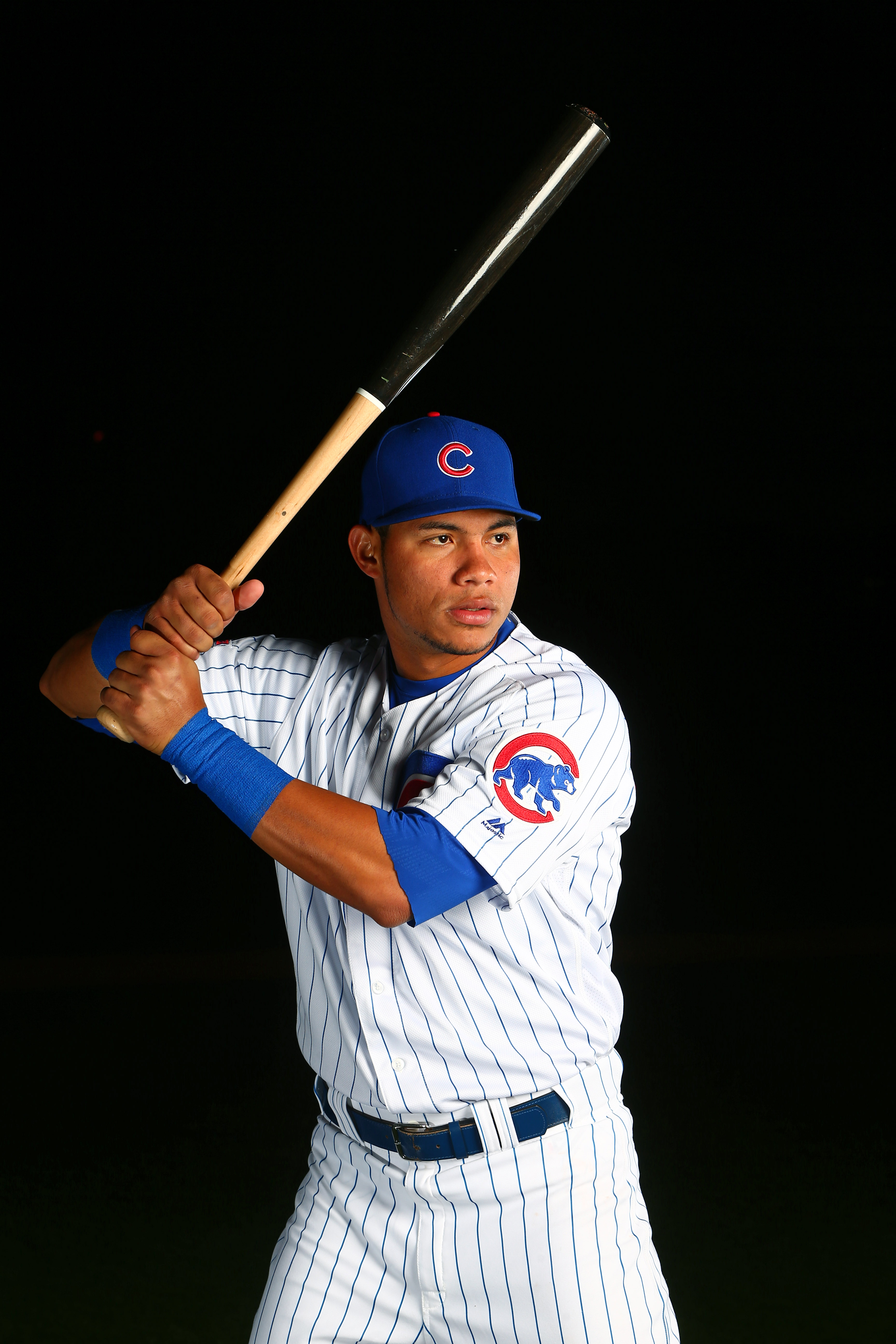
The 24-year-old Contreras entered the season rated as one of the game’s top prospects in the eyes of ESPN’s Keith Law (No. 27), Baseball America (No. 67), MLB.com (No. 50) and Baseball Prospectus (No. 57). He’s shown full well why those outlets were so high on his skills this season with an incredible showing at Triple-A Iowa, where he’s batted .350/.439/.591 with nine homers and 16 doubles in 239 plate appearances this season.
Law called Contreras a “legitimate two-way threat behind the plate” in his scouting report, praising his 70-grade arm (on the 20-80 scale) and noting that Contreras had an unexpected but meteoric rise through the team’s farm rankings. Contreras, a converted third baseman, has taken to catching well and while he may be an offensive-minded backstop, per MLB.com’s scouting report, he does figure to stick behind the plate. His experience playing infield could make him a multi-position reserve while Montero is still in the fold, BA noted in their report, adding that his bat may yield more gap power than home run power.
From a defensive standpoint, Contreras has halted 31 percent of attempted stolen bases against him this season. Baseball Prospectus graded his pitch-framing efforts as below average in both 2015 and 2016, although considering the fact that catching is still relatively new to Contreras, it’s perhaps not surprising that there’s still some room for refinement in the intricacies of working behind the dish. Certainly, sharing a dugout with Montero and Ross — two of the game’s better framing catchers — could prove beneficial to Contreras in the long run.
Because of the timing of his promotion, the most Major League service time that Contreras could accrue in 2016 would be 108 days. Even if he’s in the Majors to stay, that will leave him well shy of Super Two designation, so he should only qualify for arbitration the standard three times. As it stands, the earliest that Contreras could become eligible for free agency would be upon completion of the 2022 season.
The exact manner in which skipper Joe Maddon will work Contreras into the lineup remains to be seen. Montero has gotten base at a reasonable clip this season but his overall .210/.333/.343 batting line hasn’t lived up to expectations. Ross, on the other hand, has exceeded expectations, batting a healthy .237/.339/.409 after turning in a combined .599 OPS from 2013-15 with the Red Sox and Cubs. However, at 39 years of age, the Cubs probably weren’t planning on giving Ross a near-equal share of the playing time behind the plate, but Ross has actually logged more games than Montero this season and tallied just 11 fewer plate appearances and six fewer innings behind the dish. Adding Contreras to the mix will allow Chicago to lessen the load for the aging Ross and perhaps deliver an offensive upgrade over Montero on days in which Contreras dons the tools of ignorance.
Photo courtesy of USA Today Sports Images.
Central Notes: Wong, Nathan, Ventura, Indians, Brewers
Demoted Cardinals second baseman Kolten Wong has begun to play some center field with Triple-A Memphis as a means of expanding his versatility to the team, as MLB.com’s Jenifer Langosch writes. Wong, who signed a five-year/$25.5MM extension back in March only to be optioned in June after struggling all season, has experience playing center field from his college days but hadn’t suited up there as a pro until Monday night. “”That’s kind of what our club is all about right now, being able to play multiple positions and give yourself a chance to help us in ways you may not see as obvious,” said Cardinals manager Mike Matheny. “He’s got speed, instincts. All those put together really make him able to play almost anywhere.” The struggles of Randal Grichuk and regression from April star Jeremy Hazelbaker could lead to an opportunity for Wong in center field if his bat returns to form.
More from the game’s Central divisions…
- Former All-Star Joe Nathan, who signed a minor league deal with the Cubs earlier this season, spoke to Jesse Rogers of ESPN Chicago about his recovery from a second Tommy John surgery and his eventual aspirations of pitching for the big league club. Nathan said he’s received encouraging feedback from the medical staff thus far and is on pace to pitch in a game on Friday of this week with three bullpens under his belt. Nathan tells Rogers that when he initially spoke to president of baseball operations Theo Epstein, he made it clear that he was willing to pitch in any situation if he is ultimately able to work his way back to the Majors. “I basically told him I know how good your ballclub is with or without me,” said the 41-year-old Nathan. “I’m not here to try and disrupt anything. If you need me to throw in the sixth inning, seventh inning, I’m here for you. Whatever you want.” Nathan could begin a rehab assignment with Double-A later this month, Rogers adds.
- There’s been plenty of talk as of late regarding Royals right-hander Yordano Ventura, with some reports indicating that he’s been offered to other teams in trades and another from MLB.com’s Jeffrey Flanagan in which a team source called the notion “utter nonsense.” Rob Bradford of WEEI.com adds his hat to the mix, writing that as of Monday this week, a source close to the situation told him that Kansas City is not currently shopping Ventura. The Royals, according to Bradford, are reluctant to part with Ventura because of a lack of an immediate replacement for the 25-year-old and due to the friendly nature of his contract.
- Indians president of baseball ops Chris Antonetti said in an appearance on MLB Network Radio on SiriusXM today (Twitter link) that top outfield prospects Bradley Zimmer and Clint Frazier have become options for him, though he hedged the statement somewhat, adding: “…whether that becomes the latter part of this year, we’ll see.” A recent report suggested that Frazier and Zimmer — the organization’s top two prospects — wouldn’t be options at the big league level this season even after Marlon Byrd was suspended for 162 games. Cleveland, however, is still without Michael Brantley (whose injury situation is the source of plenty of uncertainty) and has lost both Byrd and Abraham Almonte to PED suspensions. Zimmer, 23, was the 21st pick of the 2014 draft and is hitting .233/.359/.479 with 10 homers and 21 steals at Double-A Akron. Frazier, his Akron teammate, has been even more impressive; the No. 5 pick from the 2013 draft is hitting .308/.402/.500 on the season. Both were consensus Top 50 prospects entering the season.
- Ryan Braun tells MLB.com’s Michael Wagaman that he’s aware of the trade rumors swirling around his name and has had conversations with Brewers GM David Stearns about the possibility of such a move. Braun says he has a “great relationship” with the team’s management. “As far as I know I don’t think that there’s anything that’s that close,” he adds. “But if it was up to me, if I was running an organization there would never be anybody that was off-limits. I would be open to anything, I would listen to any proposals anybody else has. Certainly they should be doing that with every player on our roster, as should every other team.”
Cubs, Brian Matusz Agree To Minor League Deal
The Cubs have signed free-agent lefty Brian Matusz to a minor league contract, reports Mark Gonzales of the Chicago Tribune (via Twitter). The longtime Orioles southpaw was recently traded from Baltimore to Atlanta alongside a Competitive Balance Draft Pick in a salary dump deal. The Braves immediately designated Matusz for assignment upon making the deal and released him shortly thereafter.
The 29-year-old Matusz missed significant time with an intercostal strain this season and has struggled when healthy enough to take the mound. He’s surrendered eight runs in six innings while allowing 11 hits and seven walks with just one strikeout. Those unsightly numbers aside, Matusz has a solid track record in the bullpen, where he posted a combined 3.32 ERA with 9.4 K/9 against 3.1 BB/9 in 151 2/3 innings from 2013-15. In that time he faced 333 lefties and held them to a miserable .190/.245/.320 batting line with a 100-to-17 K/BB ratio.
While off-hand comparisons to Orioles-castoff-turned-Cubs-ace Jake Arrieta are probably unavoidable, there’s not much of a parallel here, as Matusz has already been cast aside by a second team and already has enough service time to become a free agent at season’s end, whereas Arrieta was acquired in a trade with four and a half years of club control remaining. Matusz, however, will be stretched out as a starter with Triple-A Iowa, according to MASNsports.com’s Roch Kubatko, so it appears he’ll at least be presented with an opportunity to show that he has some rotation upside remaining. Of course, the Cubs don’t have a spot in their rotation that is open at the moment — Arrieta, Jon Lester, John Lackey, Kyle Hendricks and Jason Hammel have all pitched to a 3.05 ERA or better — but Matusz could be a depth piece in the event of an injury to one of those five or a safety net should Clayton Richard‘s recent struggles in the bullpen persist.
Cubs Scouting Yankees’ Top Relievers
12:16pm: Schwarber, Baez and catching prospect Willson Contreras are likely off-limits in trade talks, though the same might not be true regarding Soler, according to Gordon Wittenmyer of the Chicago Sun-Times.
8:48am: The Cubs’ Jason Parks was at Yankee Stadium this week to scout the Bombers’ all-world bullpen trio of Aroldis Chapman, Andrew Miller and Dellin Betances, reports George A. King III of the New York Post. Chapman, who’s in a contract year, could be a rental for the Cubs. Miller is under contract through 2018 at a palatable $9MM, while Betances is making the league-minimum salary of $507,500 and is controllable through arbitration for three more seasons. Betances seems the least likely of the three to go anywhere, but the Yankees are willing to listen to offers for him, according to King.
With a league-best 42-18 record, the Cubs clearly aren’t a team rife with flaws. One area of concern, though, is their bullpen, which could use another dominant arm to join the excellent late-game duo of closer Hector Rondon and setup man Pedro Strop. A few other Cubs relievers – namely Trevor Cahill, Travis Wood and ex-Yankee Adam Warren – have done well to prevent runs so far this year, but their peripherals suggest serious regression could be on the way. That isn’t the case for any of Chapman, Miller or Betances. All three have more than lived up to the hype this season in fanning a combined 128 batters, issuing a paltry 14 walks and surrendering 17 earned runs in 71 1/3 innings. Of course, given their importance to the Yankees – who have climbed back to .500 and sit three games out of a Wild Card position – it’s certainly not a sure thing any of them will switch uniforms prior to the Aug. 1 trade deadline.
In the event the Yankees do decide this isn’t their year and elect to put their star relievers on the block, it would likely take one or more enticing young pieces to land a member of the troika. The Cubs have plenty of quality youth in their farm system, which ESPN’s Keith Law (Insider required and recommended) ranked as the league’s fourth-best group entering the season. World Series-contending Chicago probably wouldn’t want to weaken its major league depth by moving the likes of Javier Baez or Jorge Soler, however, and the Post’s Joel Sherman reported last week that the Cubs are not interested in dealing injured catcher/outfielder Kyle Schwarber for Miller. It stands to reason they wouldn’t move him for Chapman, either, though it’s unknown in Betances’ case.